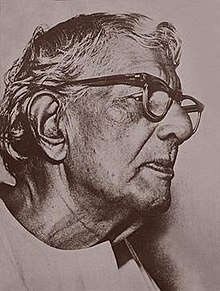
Stroll into a normal white collar class craftsmanship adoring family of West Bengal, and chances are that you may go over a well-safeguarded representation of Jamini Roy ( যামিনী রায় ) instead of an extravagant looking work of art of one of India’s numerous advanced specialists. The artworks must be well-safeguarded, for Jamini Roy would not have sold his work, had he questioned his purchaser’s enthusiasm for craftsmanship. While a large portion of the Indian painters of the twentieth Century were amped up for present day craftsmanship, which brought them great returns, Jamini Roy stood apart for his adoration towards Indian roots. His enthusiasm for basic Indian society workmanship was with the end goal that he couldn’t have cared less about selling his works at extravagant costs and just sold them for as meager as 350 rupees. What’s more, he would repurchase his works, should he discover that his artistic creations are kept up ineffectively by the purchaser. Affected by the straightforwardness of Kalighat depictions (Indian people workmanship), Jamini Roy abandoned current craftsmanship and adhered to his underlying foundations, winning a large number of hearts all the while. He additionally abandoned utilizing European paints and even canvases to supplant them with appropriate other options. In 1954, the Government of India regarded him with Padma Bhushan for his commitment towards craftsmanship.
Youth and Early Life
Jamini Roy was conceived in the year 1887 at Beliatore town in the Bankura locale of West Bengal. Roy was naturally introduced to a well-to-do group of land-proprietors. His dad, Ramataran Roy, left his taxpayer driven organizations to seek after his enthusiasm for craftsmanship. In the year 1903, when he was just 16 years of age, Jamini Roy left his town and made it right to Calcutta (presently Kolkata) to enlist himself at the Government College of Art. There, he got training under Abanindranath Tagore, renowned for his important commitment in the field of present day workmanship. Tagore was the bad habit head of the school and prepared Roy according to the common scholastic custom. Roy completed his training in 1908 and was given a Diploma in Fine Arts. Roy was consistent with the workmanship that he learned and began painting as per the Western old style. In any case, he straightaway understood that his heart had a place with some other type of workmanship.
Profession
Jamini Roy began his profession as a picture painter yet wasn’t totally cheerful about being a representation painter who worked for commission. It was in the year 1925 that he heard his actual calling outside the well known Kalighat sanctuary in Calcutta. In the wake of watching a couple Kalighat works of art, showed outside the sanctuary, Jamini instinctually realized what his inclination and intrigue was, the point at which it came to craftsmanship. He realized that the Bengali society craftsmanship could be utilized as a stone to cut down not two but rather three feathered creatures – an approach to disentangle and depict the lives of ordinary citizens; to make his specialty available to all; to bring back the magnificence of Indian workmanship. From that minute onwards, his works of art began mirroring the Kalighat style of workmanship. By the mid 1930s, Jamini Roy turned out to be completely acquainted with the lines of the Kalighat figure of speech and delivered increasingly number of craftsmanships. In 1938, his fine arts turned into the primary Indian works of art to be shown at a British-governed road in Calcutta. Jamini’s point of view started to hold up under natural product during the 1940s when his works were purchased by normal white collar class Indians. What shocked him however was the intrigue appeared by the European people group towards obtaining his canvases. With the progression of time, his artistic creations were just mirroring the indigenous craft of Kalighat painting, alongside the earthenware’s of the Bishnupur sanctuary. In the next years, his works were displayed at renowned shows in spots like London and New York City. At this point, Jamini Roy had achieved what he had planned to do when he previously exchanged over from the Western traditional styleto the society specialty of Bengal.
 Site Title