Be yourself; Everyone else is already taken.
— Oscar Wilde.
This is the first post on my new blog. I’m just getting this new blog going, so stay tuned for more. Subscribe below to get notified when I post new updates.
Be yourself; Everyone else is already taken.
— Oscar Wilde.
This is the first post on my new blog. I’m just getting this new blog going, so stay tuned for more. Subscribe below to get notified when I post new updates.

Dengue fever ( ডেঙ্গুর লক্ষণ ও প্রতিকার ) is a horrifying, crippling mosquito-borne disease brought about by any of four solidly related dengue contaminations. These diseases are related to the contaminations that reason West Nile pollution and yellow fever.
A normal 390 million dengue ailments happen worldwide consistently, with around 96 million achieving infection. Most cases occur in tropical scopes of the world, with the most genuine risk occurring in:
The Indian subcontinent
Southern China
Taiwan
The Pacific Islands
The Caribbean (except for Cuba and the Cayman Islands)
Mexico
Central and South America (except for Chile, Paraguay, and Argentina)
Most cases in the United States occur in people who gotten the pollution while traveling abroad. Regardless, the peril is growing for people living along the Texas-Mexico edge and in various pieces of the southern United States. In 2009, a scene of dengue fever was perceived in Key West, Fla.
Dengue fever is transmitted by the eat of an Aedes mosquito spoiled with a dengue disease. The mosquito winds up recognizably tainted when it eats a man with dengue disease in their blood. It can’t be spread explicitly beginning with one individual then onto the following person.
Signs of Dengue Fever
Signs, which ordinarily start four to six days after defilement and prop up for as long as 10 days, may join
Unexpected, high fever
Genuine cerebral agonies
Torment behind the eyes
Genuine joint and muscle torment
Exhaustion
Disorder
Hurling
Skin rash, which appears to be two to five days after the start of fever
Delicate kicking the bucket (such a nose channel, depleting gums, or basic injuring)
A portion of the time, signs are smooth and can be stirred up for those of this present season’s cool infection or another viral sullying. Increasingly energetic children and people who have never had the sullying tend to have milder cases than progressively prepared adolescents and adults. Nevertheless, significant issues can make. These consolidate dengue hemorrhagic fever, a remarkable entrapment depicted by high fever, damage to lymph and veins, leaking from the nose and gums, expanding of the liver, and disillusionment of the circulatory structure. The appearances may progress to huge kicking the bucket, shock, and passing. This is called dengue paralyze scatter (DSS).
People with weakened safe systems and furthermore those with a minute or following dengue malady are acknowledged to be at progressively genuine danger for making dengue hemorrhagic fever.
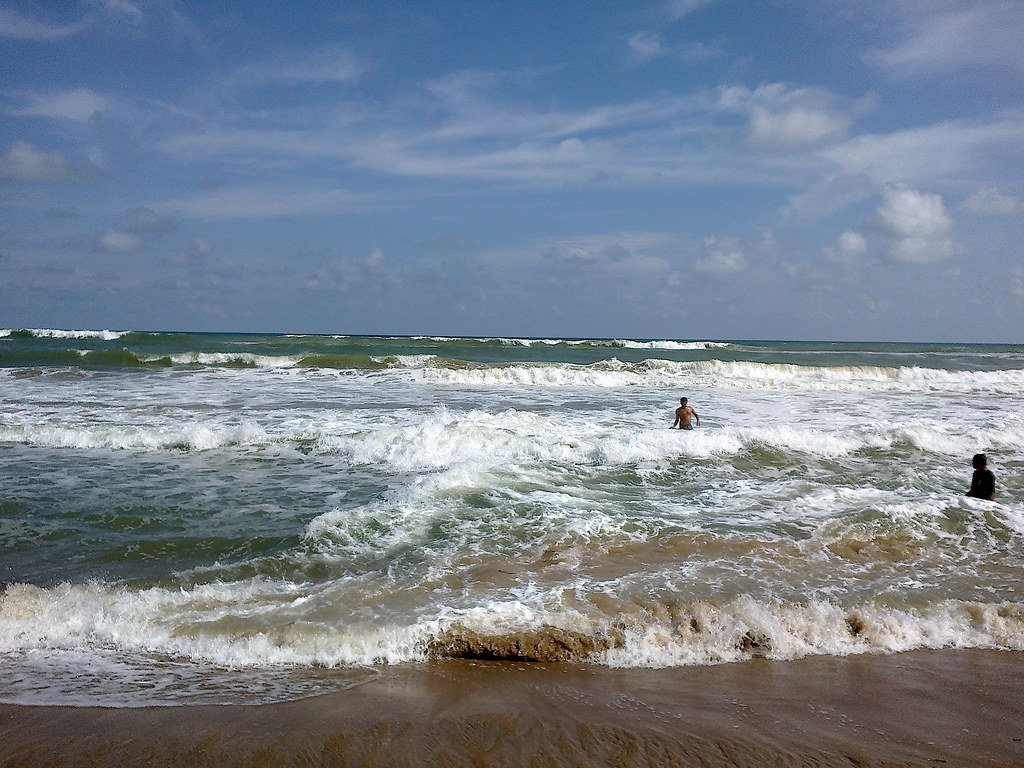
Puri ( পুরী ) is known as the sacred place that is known for Jaggannath. It is eminent as one of the most conspicuous sacred destinations in India. Puri is home to the popular Jaggannath sanctuary. This is accepted that the ruler Jaggannath himself dwells here. This is one reason why this spot is otherwise called Jaggannath Puri or Pursotamma Puri. Puri has one of the most lovely sea shores on the East Coast of India, called the Golden Beach. It is called so in light of the brilliant sand on the sea shore.
Puri is one and a half hour from Bhubaneswar, one of the most unmistakable urban communities in Orissa by transport. In the event that you take the choice of rail in any case, it will take both of you hours. You can likewise venture out to Puri from any significant Indian city as Puri is an outstanding rail head on the East Coast. Trains are accessible from Kolkata, New Delhi and Ahmadabad.
Puri Hotels – A Mix of Luxury and Economy
Most premium Puri Hotels are accessible in a zone called C.T. Street and New Marine Drive Road. In the event that you are searching for spending Puri inns notwithstanding, you will have the option to discover them in a zone called Swargadwar. You can likewise visit the well known sun sanctuary of Konark from here. Recorded underneath are the absolute best known inns in Puri which have superb civilities at sensible costs.
– Vijoy International Hotel, Puri – The Vijoi International lodging is situated at C.T. street, 65 kilometers from the Biju Patnaik air terminal and around one kilometer from the Puri railroad station. The Vijoi International has twofold rooms beginning at Rs. 1200 and goes up to Rs. 3300 every day. With a sum of 44 rooms, the lodging has non AC exclusive rooms at the very good quality. Luxuries remember Doctor for call, in house eatery, vehicle rental, exercise room and a pool.
– Mayfair Beach Resort, Puri – The Mayfair Beach resort includes as one of the very good quality sea shore resorts with rooms beginning at Rs. 7500 and going up to Rs. 12,000. This lodging has played host to film stars and is the main inn that has facilitated the Indian cricket crew. It is arranged 50 meters from the sea shore and has 34 rooms taking all things together. The cost for a day’s stay incorporates morning breakfast.
– Puri Hotel, Puri – If you are on a shoe string spending plan, a great alternative is the Puri Hotel in the Sea Beach region. The duties for the rooms start at Rs. 400 and go up to Rs. 800. It incorporates twofold rooms and gives excellent room administration and a decent perspective on the sea shore.
Notwithstanding these Puri Hotels, there is a large group of other top of the line or mid range lodgings accessible. Look over among them remembering your spending limit and your inclinations for luxuries you or your family may require.
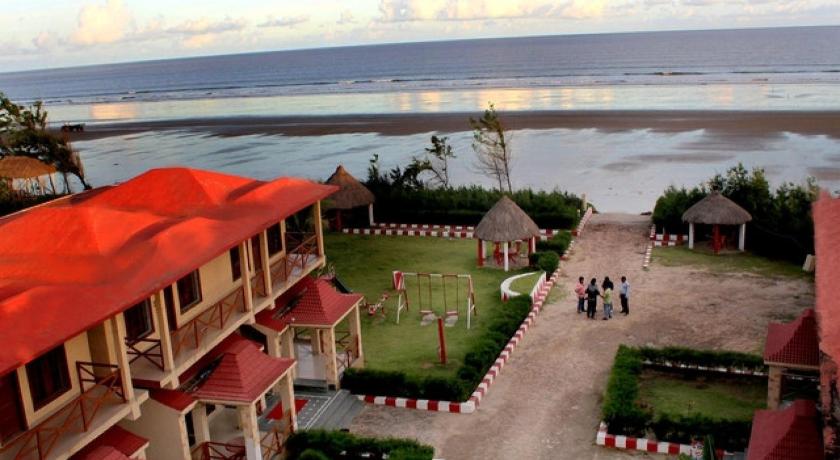
West Bengal, the land to venture out to, a safe house of social charms, a human progress to visit through is no uncertainty can be likewise called a movement goal. Voyagers come to West Bengal for its abundance of sights, social richness, assorted variety of landscape and looking for that unique something, an additional punch that lone a spot like West Bengal guarantees and conveys. West Bengal is the place individuals live with assortment, blossom with decent variety and are too acquainted with enormity to give it a chance to boggle them. Aside from the lavishness of the City of Joy, Kolkata, West Bengal has many number of places of interest situated outside the city. Spots like Mondarbani, Sankarpur, Digha, Sundarban, Bakkhali, Shantiniketan, Ghatshila, and so on. An excursion to these goals isn’t an ill-conceived notion for a short trip away from the rushing about of the city life.
To begin from some place, we previously picked an extraordinary goal, Mondarbani. It is called extraordinary as the name is as yet obscure to many. Your mission for the fantasy sea shore occasion finishes here. So as to breakfree from the unremarkable life and to disregard our every day issues, Mondarbani is a decent spot for an ideal end of the week. Without a doubt, Mondarbani is seven long kilometers of fun and skip!
Mondarbani is one of the as of late discovered sea shores on the Bay of Bengal. It is a sea shore resort in Purba Medinipur region of South Bengal, one of the southern areas of West Bengal. It has a hard sea shore where you can drive. Furthermore, the best part is, it’s not yet that swarmed. In the event that you love to be distant from everyone else, this is the spot for you. Part numerous excellent hotels are there, similar to Sana sea shore, Rose Valley, and so forth.
Mondarbani is additionally a sea shore resort of South Bengal. It is one of the southern locale of West Bengal. It is practically 180km from Kolkata Airport on the Kolkata-Digha course and only 14km from Chaulkhola. Mud cottages and manors go head to head over the city lanes. Offensive extravagance and limp living are occupants of the spot.
Instructions to Get There
By Road: Mondarbani is effectively available. To arrive at the sea shore resort, you may arrive at the air terminal of Calcutta. Kharagpur and Calcutta. It additionally gives the answer for the rail transport with different urban areas of India. The street course from Kolkata is: Esplanade – 63km – Kolaghat – 3km – Mecheda – 80km – Contai – 12.3km – Chawalkhola – 4km – Kalindi – 4km – Dadan Patra Bar – 6km – Mandarmoni
As you travel from Kolkata, subsequent to intersection the VidyaSagar Setu take the Kona Express Way. In the wake of driving some time go left to get the Mumbai Road. Drive till you reach Kolaghat. From here take left for the Digha Route. 2 Km before coming to Contai Town you get Contai By-Pass street. This street is around 3 Km long and would give you alleviation from the jam-packed city drive. In the event that you drop by transport get down at Chawalkhola and you can contract private vehicles from here to take you to your goal. Indeed, even the hotels have vehicle get offices from Contai/Chawalkhola. Reach them prior to profit the equivalent. Take a left abandon Chawalkhola and pursue the town street (be prepared for a rough ride) till it closes. It is around 8 km.
This town street closes into a green delightful ocean side town called ‘Dadon-Patro-Bar’. Here there are number of resorts recently made and some coming up, giving vacationer a warm and entrancing remain inside rich green scene disregarding the beach. This is the primary gathering of resorts of Mandarmani. You can design remaining still further to encounter an energizing drive ahead. In the event that you pick the subsequent choice, don’t drive after dull on the sea shore since it is pitch dim, and there is nobody in the region till you arrive at your retreat. So you should begin well in time. Devotees please note that Mondarbani gloats of her really virgin, 13 Km long motorable sea shore, longest in India. All out drive time from Kolkata to Mondarbani would be 3.5 hours. Additionally take earlier data of elevated tides (Only in the stormy season), on the grounds that during elevated tides water may arrive at upto the motorable stretch of the sea shore. From Kolkata, get a transport at Esplanade or at Howrah Rly.Stn.bus station set out toward Chawalkhola. You can benefit any transport administration headed towards Digha.
What To See
Mondarbani is one of the as of late discovered sea shores on Bay of Bengal. It is a sea shore resort in Purba Medinipur area of South Bengal, one of the southern areas of West Bengal. It has a hard sea shore where you can drive. Furthermore, the best part is, it’s not yet that swarmed. On the off chance that you love to be distant from everyone else, this is the spot for you. Parcel numerous lovely hotels are there, similar to Sana sea shore, Rose Valley, and so on.
Convenience is effectively accessible at Mondarbani. There are traveler lodges, select inns, spending inns et al. It is prudent to book before the Christmas season. Not many hotels have additionally sprung up because of the looking over request of the spot. Sana resort, one of the delightfully created retreats of Mondarbani
( মন্দারমণি ) merits remaining. In the midst of the characteristic excellence and extravagance, this hotel vows to give the most extreme delight to be in a position of decision. The hotel is given a characteristic look be a decent park, pool, lovely houses, craftsmanship shops, course of action for indoor and open air games, cooled multi-cooking café, meeting room, bistro, hookah bar, and so on. The bungalows inside the hotel have decent lives with every single present day courtesy like AC room, TV, join shower, and so forth. The houses are wonderfully enhanced with a town type look.
The stunningly wonderful sea shore is a genuine heaven for nature sweethearts. The casuarinas ranches along the coast are so spellbinding! The quiet ocean is so enchanting! The fantasy goal of Mondarbani on the eastern shore of India is famous for its level and hard sea shores. The magnificence of the little sea shore of Mondarbani has pulled in vacationers since its initiation.
At the Mondarbani sea shore, you can loosen up yourself in the sun, ocean, surf and the sand. The ocean is alright for swimming so you may dive in! Near Mondarbani are the other vacation spots as well. This is an ideal escape in the lap of nature. Further ahead is Shankarpur, another ocean sea shore, where you may appreciate the delights of a private sea shore. Their fowls speck the sky and little waves wash the quiet, clean sea shore, as a couple anglers carry out their day by day responsibility silently. This sea shore isn’t at all packed as in Digha or Shankarpur. Here you won’t discover any clamor aside from the ocean thunders. You’ll in all probability be strolling between your retreat and the sea shore, in any case on the off chance that you have to travel longer separations, keep away from the compulsion to drive on the sea shore. It’s as of now had an unfavorable effect on the neighborhood environment, and you’ll just be exacerbating it.
West Bengal, the land to go to, a shelter of social amuses, a progress to visit through, most likely can be additionally called a movement goal. Travelers come to West Bengal for its abundance of sights, social richness, assorted variety of territory and looking for that exceptional something, an additional punch that lone a spot like West Bengal guarantees and conveys. Aside from the wealth of the City of Joy, Kolkata, West Bengal has many number of places of interest situated outside the city. Spots like Digha ( দীঘা ), Puri, and so forth merit referencing. A ride to these goals isn’t a poorly conceived notion for a short trip away from the buzzing about of the city life.
At the point when we talk about ocean sea shores, the name Digha strikes a chord. Digha can be called West Bengal’s most well known ocean resort and place of interest, found south-west of Calcutta. It was found in the late eighteenth century by the British. Initially known as Beerkul, it is named as the “Brighton of the East” in one of Warren Hasting’s letters (1780 AD) to his significant other. In 1923, an English traveler John Frank Smith was enchanted by the magnificence of Digha and began living there. John Frank Smiths’ works about Digha, gradually offered presentation to this spot. After autonomy, he persuaded the Chief Minister of West Bengal, Dr. Bidhan Chandra Roy to create Digha as a sea shore resort. Digha is 187 km from Calcutta and can be named as perhaps the best spot for a mitigating occasion. The spot has a low slope with a shallow sand sea shore with delicate waves, which expands 7 kms long. In Digha, the ocean begins about a mile away from the beginning of the sea shore. The beautiful excellence of this spot is relieving and attracting. The sea shore is supported with casuarinas ranches along the coast upgrading the magnificence of this spot. These trees separated from improving the sands additionally help in decreasing the disintegration on the ridges.
What To see:
One can see both dawn and dusk at Digha ocean sea shore. The nightfalls and dawns reflecting off the salty waters of the Bay of Bengal is something straight off a craftsman’s easel. The ocean at Digha is quiet and shallow for about a mile from the sea shore, making it very safe for swimming. Digha is a hard sea shore, where one can drive during low tide. In any case, the sea shore is confronting the issue of ocean disintegration. In this way, washing is fitting just during the low tide. One can see both dawn and nightfall at Digha ocean sea shore. A community, Digha is packed with inns for the most part around one principle street. It can flaunt a wide and untainted sea shore, caesarian forests by the side of a delicate ocean and a decent atmosphere round the year. Washing is prudent just during the low tide.
The Digha showcase is open at low tide. Trinkets made of ocean shell, Shell adornments, moderate assortments of rumored Madur of Midnapore (hand-woven tangle made of weeds) in brilliant structures; Cottage specialties of Digha and Midnapore are accessible at the sea shore and at different outlets around the local area. To bring home a souvenir, attempt the cabin artworks of Digha and Midnapore.
New Digha: New Digha is an expansion of Digha. It also has a few inns. There is likewise a little park with a lake.
Chandaneshwar: Only 8 kms from Digha, Chandaneshw ar is the site of an old Shiva sanctuary. Additionally Lankeswari (14 km.) and Kapal Kundala Temple (45 km.) close Contai might be visited.
Street:
Highway 1. Calcutta-Howrah-Mechheda-Norghat-Contai-Ramnagar-Digha: 185 km.
Highway 2. Calcutta-Deulti-Kolaghat-Kharagpur-Digha: 243 km.
Highway 3. Tarakeswar-Harinkhola-Arambag-Vishnupur-Kharagpur-Digha: 355 km
Transport Service
Transport benefits in Digha are extremely visit. Express transports employ from Esplanade (Calcutta) from 0630 hours to 1000 hours (Fare Rs.30/ – ). Extravagance transports from West Bengal Tourist Bureau, 3/2 B.B.D.Bagh leaves every day at 0700 hours (Fare Rs.40/ – ). It is right around a 5 hour venture from Kolkata. Transport administration is likewise accessible from towns crosswise over West Bengal, for example, Asansol, Midnapore, Howrah, Bankura and furthermore from Orissa through Balasore (Baleswar). C.S.T.C.
Train Service
In 2004, train administrations began in Digha. Digha is all around associated with Rail from Howrah just as Kharagpur. From Howrah every day 2 trains and from Kharagpur week by week 1 train is running. There are trains from Shalimar railroad station and there are a couple of trains from Howrah Station as well. Shalimar-Digha Express Train no.2867 leaves from Shalimar at 08.00 hrs and lands at Digha station at 11.15 hrs. Return train no. 2868 withdraws Digha station at 13.40 hrs to show up Santragachi station (around 8 km from Howrah) at 16.40 hrs. These pair of trains runs six days every week with the exception of Sundays. For Sundays there are 2867A Up and 2868A Dn trains which begin from and end at Howrah station. The Dn train shows up Howrah (189 km) at 17.00 hrs.
Convenience:
The Government convenience is additionally accessible at both old digha and new digha. The booking ahead of time opens three months ahead of time and closes days before the real date of occupation. There are various lodgings and Tourist Lodge of wide range is accessible both in Digha.
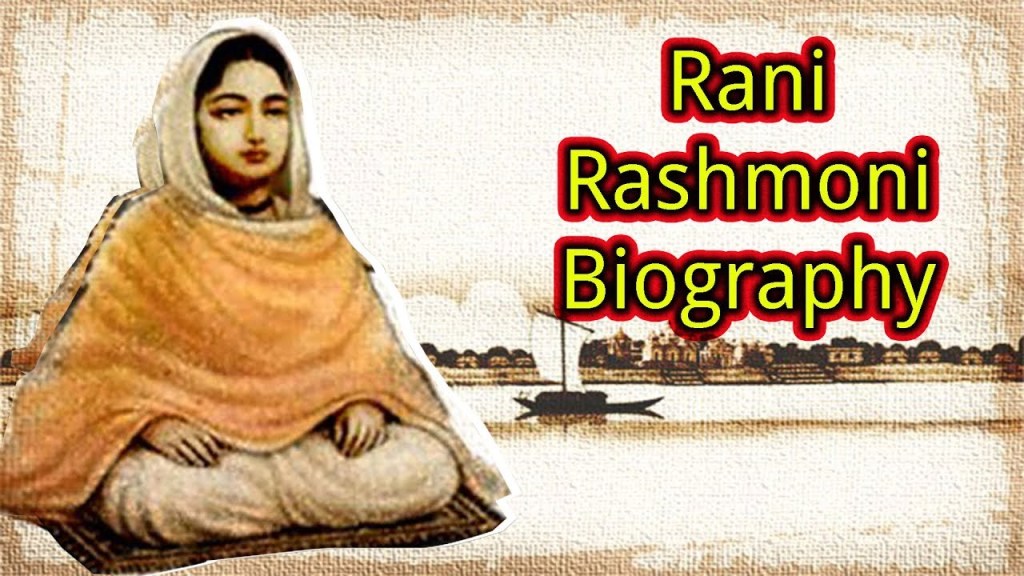
Rani Rashmoni (28 September 1793 – 19 February 1861) was the organizer of the Dakshineswar Kali Temple, Kolkata, and remained intently connected with Sri Ramakrishna Paramhansa after she named him as the cleric of the sanctuary. Her other development works incorporate the development of a street from Subarnarekha River to Puri for the explorers, Babughat (otherwise called Babu Rajchandra Das Ghat), Ahiritola Ghat and Nimtola Ghat for the regular bathers at the Ganges. She additionally offered impressive philanthropy to the Imperial Library (presently the National Library of India), the Hindu College (presently Presidency University).
By and by, the Lokamata Rani Rashmoni ( রাণী রাসমণি ) Mission is arranged at Nimpith, South 24 Parganas, West Bengal, 743338, India.
Life story
She was conceived on 28 September 1793. Her dad Harekrishna Das lived in Kona town, in present-day Halisahar, North 24 Parganas. Her mom Rampriya devi passed on when she was only seven years of age. Especially wonderful, she was hitched to Babu Rajachandra Das (Marh) of Janbazar, Kolkata, an individual from a rich zamindar family, when she was eleven years of age. After her significant other’s demise in 1836 she assumed responsibility for the zamindari and finances.She was 43 years in age at that time.They had four little girls Padmamani, Kumari, Karunamoyee and Jagadamba. Karunamoyee kicked the bucket in 1833 after labor while Kumari passed on in 1837. Padmamani was hitched to Ramchandra Ata. Kumari was hitched to Pairimohan Biswas. Karunamoyee was at first hitched to Mathurmohan Biswas. After her demise Jagadamba was offered to him.
She started taking care of the zamindari after her better half’s demise.
The Rani and her conflicts with the British in India became family unit stories in her time. By hindering the transportation exchange on a piece of Ganges she constrained the British to annul the expense forced on angling in the stream, which undermined the job of poor anglers. When Puja parades were halted by the British on the charge that they upset the harmony, she opposed the requests. The British needed to pull back the punishment forced on her even with open resistance and revolting in her help. Rani Rashmoni likewise had surprisingly various beneficent works and different commitments to society. She managed the development of a street from Subarnarekha waterway to Puri for explorers. She supported the development of ghats, for example, Babughat (in memory of her better half), Ahiritola Ghat and Nimtala Ghat for the every day bathers in the Ganges. She gave liberally to the then Imperial Library (presently the National Library of India) and Hindu College (presently Presidency College). Ruler Dwarkanath Tagore had sold a piece of his Zamindari in now South 24 Parganas (some portion of present-day Santoshpur and bordering territories) to Rani Rashmoni for his section to England. This piece of land which was then a piece of the Sunderbans was muddy and practically appalling aside from certain groups of hooligans who found the territory helpful to remain and wander out for loots in far away places mounted on stilts. Rani Rashmoni convinced these families and helped them to develop fisheries in the encompassing water bodies that later transformed into enormous rich bheris. They continuously surrendered their ‘calling’ of pillaging and changed into a network of anglers. This was an extraordinary social change that the Rani had started.
A celestial disclosure drove her to establish the popular sanctuary Dakshineswar Kali Temple complex on the banks of the Ganges at Dakshineswar in the North 24 Parganas. Sri Ramakrishna Paramhansa (at that point known as Gadadhar) was delegated its head minister under her support.
Despite the fact that having such an incredible profound nature the general public at that point had separated her. Being conceived in Kaivarta family ( Mahishyas ) and being a center standing Shudra cause, no Brahmin was prepared to be the cleric in her sanctuary.
Rani Rashmoni’s House at Janbazar was setting of customary Durga Puja festivity every harvest time. This included conventional ceremony, including throughout the night jatras (society theater), as opposed to by diversion for the Englishmen with whom she carried on a running quarrel. After her passing in 1861, her children in-law took to observing Durga Puja in their separate premises
In mainstream culture
Rani Rashmoni has additionally been subject of an anecdotal movie in Bengali language, titled Rani Rasmani (movie) (1955), coordinated by Kaliprasad Ghosh, and wherein lead played by acclaimed theater character and on-screen character Molina Devi.
Zee Bangla includes a day by day cleanser delineating the life of the renowned Rani, inscribed Karunamoyee Rani Rashmoni which debuted on 24 July 2017 and is broadcasted day by day.
Landmarks
A road in Esplanade, Kolkata is named after her as Rani Rashmoni Avenue, where her statue is additionally found.
Further, a street is named after her as Rani Rashmoni Road close to her familial house at Janbazar, Kolkata.
Additionally a street is named after her as Rani Rashmoni Road at Dakshineshwar.
The Department of Post of Government of India gave a postage stamp to memorialize the bicentennial of Rani Rashmoni in 1993.
A Ferry Ghat known as Rani Rashmoni Ghat has been worked for ship benefits in Barrackpore, West Bengal and in Hooghly, West Bengal (soon after the Hooghly District Correctional Home).
One of the 5 Fast Patrol Vessels of Indian Coast Guard has been named after Rani Rashmoni. It was appointed in June 2018 and will be situated in Visakhapatnam
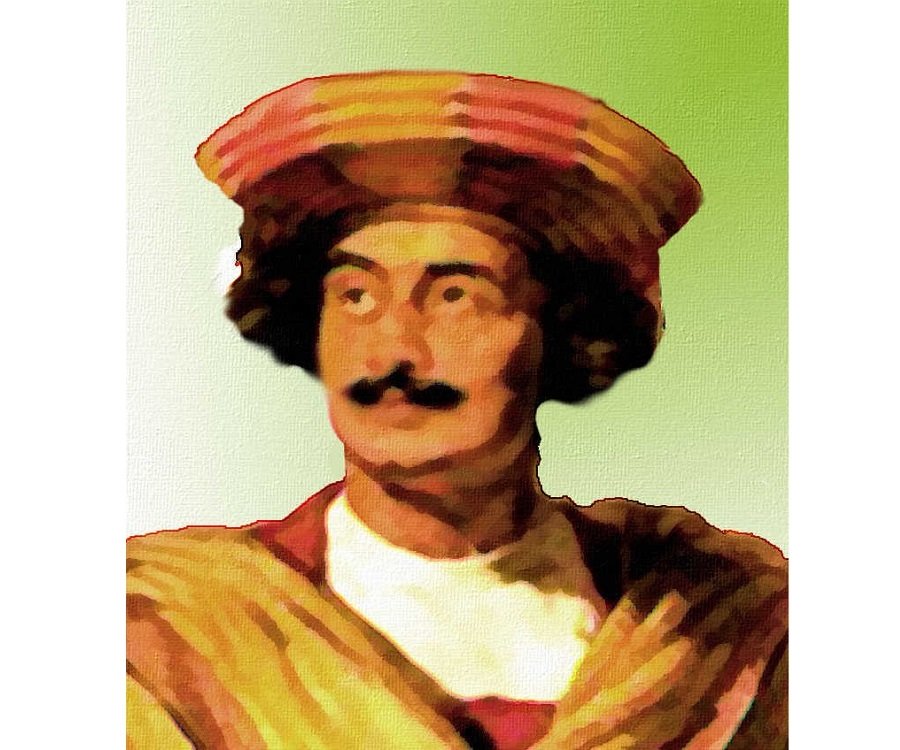
EARLY LIFE
Raja Ram Mohan roy( রাজা রামমোহন রায় )had a kid marriage at age nine however his first spouse passed on not long after the marriage.
He was hitched for a second time at ten and had two children from the marriage. After the demise of his second spouse in 1826, he wedded for a third time and his third wife outlasted him.
Ram Mohan Roy’s initial instruction is a contested. One see is that “Ram Mohan began his conventional training in the town pathshala where he learned Bengali and some Sanskrit and Persian.
He became significant student and researcher of Arabic, Persian, Sanskrit, English and Bengali; and unknown dialects, for example, Greek, Latin and Hebrew.
Later he is said to have contemplated Persian and Arabic in a madrasa in Patna and after that he was sent to Benares (Kashi) to become familiar with the complexities of Sanskrit and Hindu sacred text, including the Vedas and Upanishads.
REFORMER
He ventured out from home at an early age and avoided the common acts of icon adore and a few universal acts of the time. Roy left home and went through Himalayas and Tibet while learning Persian and Arabic alongside Sanskrit.
This impacted his considering one god, as he lectured solidarity of God and made early interpretations of Vedic sacred writings into English in the later pieces of his life.
Ram Mohan Roy’s effect on current Indian history was his recovery of the unadulterated and moral standards of the Vedanta school of theory as found in the Upnishads.
He lectured the solidarity of God, made early interpretations of Vedic sacred texts into English, helped to establish the Calcutta Unitarian Society and established the Brahma Samaj.
After the passing of his dad in 1803, he moved to Murshidabad where he distributed his first book, a Persian treatise with an Arabic prelude, “Tuhfat-ul-Muwahhidin” or “A Gift to Monotheism”.
In 1814 he settled in Calcutta and in 1815 established the Atmiya Sabha. In 1828 he built up the Brahmo Samaj, “One God Society.” In 1830, he had gone to England as an emissary of the Mughal Emperor, Akbar Shah II, who contributed him with the title of Raja to the court of King William
In 1830, Raja Ram Mohan Roy made a trip to the United Kingdom as a diplomat of the Mughal Empire to guarantee that Lord William Bentinck‟s Bengal Sati Regulation, 1829 forbidding the act of Sati was not toppled.
He was against the act of icon love, daze confidence and strict ceremonies. Rammohan needed to change Hinduism. He kicked the bucket on 27th September 1833 in England.
Strict REFORMS
As a Hindu, Rammohan was very much aware of the feeble focuses from which Hinduism was enduring. Based on the Vedas and Upanishads, he gave another life to Indian culture.
He deciphered religion with reason and restricted symbol love and ceremony. He accepted that each religion has a similar truth. He censured the ceremony of Christianity and would not acknowledge Christ as he manifestation of God.
He needed to rearrange and to modernize the Hindu religion being affected by the western idea of reason and logical idea.
BRAHMO SAMAJ
Campaigned against Hindu traditions as sati, polygamy, kid marriage and station system.Demanded property legacy rights for ladies.
In 1828, he set up the Brahmo Sabha a development of reformist Bengali Brahmins to battle against social disasters.
He upheld between station relationships, ladies instruction, widow remarriages and so on. With his
Dynamic influence Lord William Bentick,the then Governor General of British India passed the well known Regulation XVII in1829 that arranged Sati as illicit and deserving of courts.
The Brahmo Samaj received functional strides to proliferate its strict and social thoughts. It built up different scholarly social orders and instructive organizations.
Rammohan advocated the reason for English language and western arrangement of training and upheld the move of Lord Macaulay. He began the English school, the Hindu College in 1817(presidency school) and the Vedanta College at Calcutta.
Rammohan began distributing papers and magazines for which he was known as the “Father of Indian Journalism”. He altered the Bengali paper, “Sambad Kaumudi”, and the Persian paper “Mirat-Ul-Akbar”.
POLITICAL
With the glorification of antiquated Indian culture, the Brahmo Samaj as an organization helped in creating certainty among Indians in their very own religion.
Rammohan additionally had confidence in the opportunity of man and contradicted the racial prevalence of Europeans. Raja Rammohan Roy is called as the Father of Indian Renaissance because of his mass arousing and discerning reasoning.
Brahmo Samaj had various branches set up in removed territories like Punjab, Madras, Uttar Pradesh and so on.
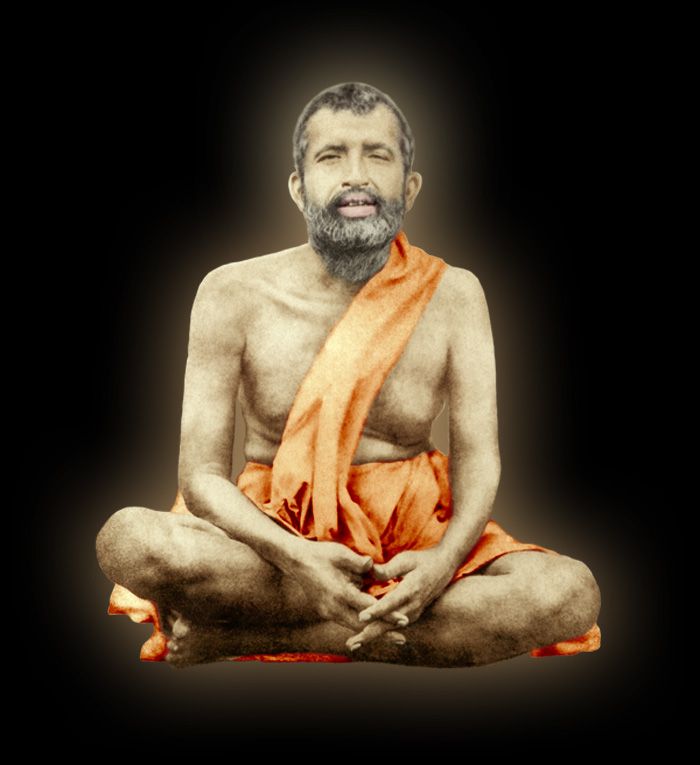
On 18 February, 1836, a youngster was conceived at Kamarpukur close to Calcutta, in Bengal. This awesome youngster was bound to come back to Hinduism the magnificence it had delighted in before the outside success of India.
The youngster was named Gadadhar. He later developed to become Sri Ramakrishna ( রামকৃষ্ণ ), who was portrayed by Romain Rolland as “the flawlessness of 2,000 years of the profound existence of 300,000,000 individuals”.
As a youngster, Sri Ramakrishna indicated awesome characteristics of immaculateness and love. He adored the organization of Sadhus. At the point when he was nineteen, his senior sibling, Ramkumar, designated him cleric of the Kali sanctuary at Sri Ramakrishna, Sri Ramakrishna biography . It was the obligation of the youthful cleric to dress and enliven the picture of the Divine Mother, Kali. His adoration for the Mother started to develop past all limits. To him, only she was genuine and the world turned into an insignificant shadow. He emptied his spirit into his every day love, and yearned to acquire a dream of the Mother of the universe.
Now and then, in distress he would rub his face against the ground and sob sharply. Such was his aching to get Her vision. He arrived at a moment that his misery was incredible to such an extent that life held not any more significance for him. It was then that he had his first vision of the Divine Mother. From that point, he would see the type of the Divine Mother frequently and get Her directions and direction.
Sri Ramakrishna was started into Vedantic reflection by Totapuri, a presumed priest who accomplished unity with God following forty years of atonement. Such was the commitment of Sri Ramakrishna that, to the awe of his Guru, he accomplished in one day, what the Guru took forty years to accomplish! In his absolute first sitting, he stayed assimilated in the province of Samadhi or God-vision for three days!
Sri Ramakrishna was exceptional in each regard. He investigated every one of the world’s extraordinary religions and found that he could have the vision of God by following any of their ways. He could neither read nor compose, yet he before long knew the essential lessons of the considerable number of organizations of Hinduism.
At the point when a Sufi showed him Islam, Sri Ramakrishna carried on with the life of an ardent Muslim and before long had the vision of Prophet Mohammed. Not long a short time later, he was pulled in to the life and lessons of Jesus Christ. Before long he had the vision of Jesus likewise, and another of Mother Mary and the heavenly kid. In a similar way he had a dream of Lord Buddha.
When Sri Ramakrishna was twenty-three, he chose as his lady of the hour, Sarada Devi, who was then five years of age. In any case, the couple never drove a householder’s life. The glorious young lady, who was herself an incredible soul, later turned into the Holy Mother, showering her Grace and gifts on the thousands who enthusiastically ran to her for comfort and solace.
Sri Ramakrishna instructed the world that God can be acknowledged through all religions. This incredible truth came to him through his immediate otherworldly experience.
An incredible piece of Sri Ramakrishna’s life was spent in preparing his followers, among whom Swami Vivekananda stood chief. Swami Brahmananda, Swami Shivananda and Swami Saradananda were a portion of his other surely understood pupils who extended and spread his crucial and wide.
Sri Ramakrishna’s lessons are given in an extraordinary work entitled, The Gospel of Sri Ramakrishna. It comprises of his day by day talks recorded by one of his reliable supporters, Mahendra Nath Gupta. It is a magnificent book giving us the lessons of the incomparable Master in a basic, clear structure.
Sri Ramakrishna left his physical body in the year 1886, in the wake of experiencing for quite a while throat disease. His lessons, given by methods for some accounts and stories, are today perused by pretty much every otherworldly competitor stepping the way of Yoga. His profound effect on India and the world has been huge.
Mahatma Gandhiji said in a tribute to this extraordinary soul: “The tale of Sri Ramakrishna’s life is an account of religion practically speaking. His life empowers us to see God up close and personal. Sri Ramakrishna was a living picture of Godliness. His adages are not those of a negligible scholarly man yet they are pages taken from the book of life.”
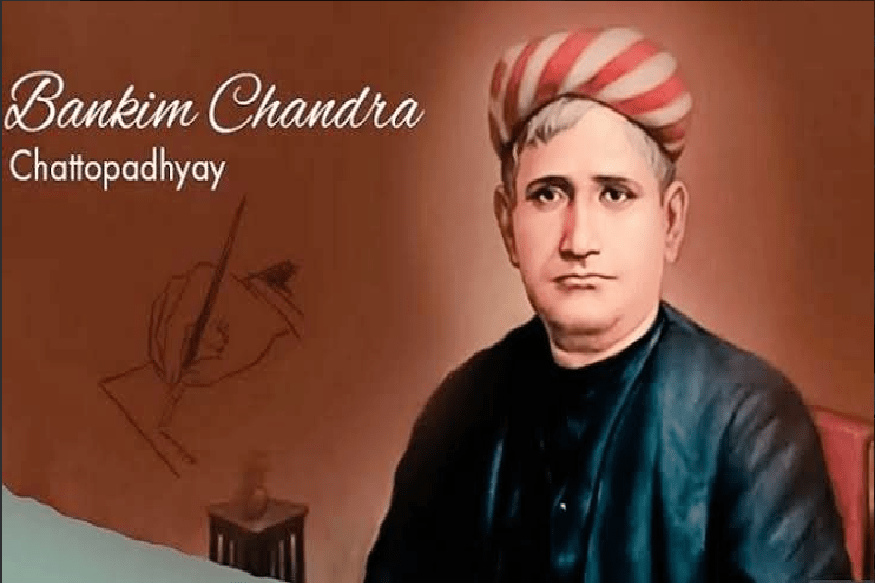
Early Life and Education
Bankim Chandra Chattopadhyay ( বঙ্কিমচন্দ্র চট্টোপাধ্যায় ) or Bankim Chandra Chatterjee was conceived on 27 June 1838 in the town Kanthalpara in the town of North 24 Parganas, Near Naihati, in a universal Bengali Brahmin family, the most youthful of three siblings, to Yadav Chandra Chattopadhyaya and Durgadebi. His dad, an administration official, proceeded to turn into the Deputy Collector of Midnapur. One of his siblings, Sanjib Chandra Chattopadhyay was likewise an author and his known for his acclaimed book “Palamau”.
He was taught at the Hooghly Mohsin College and later at the Presidency College, graduating with a degree in Arts [Law] in 1858. He was one of the initial two alumni of the University of Calcutta to be specific he and Jadunath Bose. He later got a degree in Law also, in 1869.
He was selected as Deputy Collector, much the same as his dad, of Jessore, Chattopadhyay proceeded to turn into a Deputy Magistrate, resigning from taxpayer supported organization in 1891. His years at work were peppered with occurrences that carried him into struggle with the decision British. In any case, he was made a Companion, Order of the Indian Empire in 1894.
Vocation
He was enamored with composing and started his abstract adventure as a stanza author, much the same as his object of worship Ishwarchandra Gupta. It was later when he found his potential for composing appropriately that he went to fiction. His first regularly composing was a novella that he composed for a challenge. As he didn’t win the challenge and the novella was rarely distributed. His originally distributed work was a novella in English language called ‘Rajmohan’s Wife’. Yet, since it was written in English, it neglected to accomplish a lot of thankfulness and he understood that on the off chance that he needed to compose, at that point he needed to write in Bengali. This prompted the distribution of his first Bengali fiction called ‘Durgeshnondini’ in 1865. This was a Bengali romance book. This was trailed by his first enormous distribution ‘Kapalkundala‘. The tale built up him as an essayist.
In 1869, Mrinalini turned out, which was Bankim’s intense endeavor at composing a novel that has its story set in an authentic setting. Afterward, he began distributing his month to month artistic magazine called Bangadarshan. The magazine left flow inside 4 years. Chandrasekhar was distributed in 1877. The epic had an unexpected style in comparison to Bankim’s different works. Around the same time, he additionally distributed ‘Rajani’ which is said to be personal. Bankim composed ‘Anandamath (The Abbey of Bliss)’ in 1882 which was a political novel. Its plot was in the topic of Hindu patriotism against the British principle. The book was the wellspring of the tune Vande Mataram, which later turned into the national melody of India. Others works that Bankim distributed in his lifetime were: ‘ Lok Rahasya (1874)’, ‘Bichitra Prabandha (1876)’, ‘Devi Chaudhurani (1884)’, ‘Kamalakanta (1885)’, ‘Sitaram (1887)’, ‘Muchiram Gurer Jivancharita’, ‘Krishna Charitra (1886)’, ‘Dharmatattva (1886)’, and so on.
Despite the fact that Bankim is known for the entirety of his books and expositions however he is known for ‘Anandamath (The Abbey of Bliss) the most as it was from this novel that Rabindranath Tagore took the tune ‘Vande Mataram’ and changed over into the national melody of India
Individual Life
Chattopadhyay was hitched at an extremely youthful age of eleven; he had a child from his first spouse, who kicked the bucket in 1859. He later wedded Rajalakshmi Devi. They had three delightful girls.
Passing
Chattopadhyay passed away on eighth April 1894.
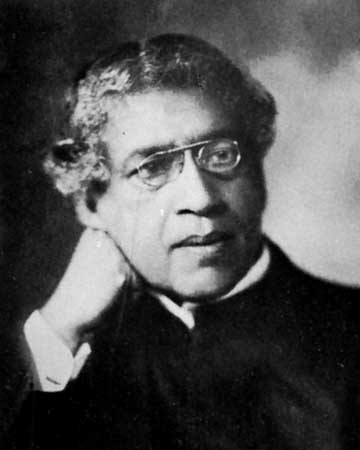
Sir J. C. Bose ( জগদীশ চন্দ্র বসু ) was an Indian scientist who discovered and demonstrated on the planet that plants additionally have life. They consume nourishment and rest during evenings, and get up promptly in the mornings. Agony and delights are there for plants as well. They likewise have birth, development and passing, as individuals. These are the discoveries of J. C. Bose.
Sir J. C. Bose was conceived on November 30, 1859 in Faridhapur, which is presently in Bangladesh. He had his initial education in St. Xavier’s High School, and college education in Calcutta and later at Cambridge, England. He joined the Presidency College, Calcutta as Assistant Professor of Physics in 1855. He mooted of his research work in that college.
Sir J. C. Bose’s dad was an exceptionally placed official in Government of India. He was likewise a nationalist. J. C. Bose was inculcated the curiosity about environment and adherence to virtues. J. C. Bose worshiped Karma of the Mahabharata for his immovability and getting success in a destruction.
Promotions:
J. C. Bose was sent to England to get selected into Indian Civil Service. He checked out Botany and Zoology. J. C. Bose, as Assistant Professor and researcher in Physics discovered the accompanying:
1) Generation of electro-magnetic floods of wavelengths 2mm to 5 mm
2) Common nature of electric reaction to all types of incitement.
3) He was the first to discover a device that produced micro-rushes of very short wavelength.
Promotions:
J. C. Bose accomplished his significance in the field of Botany. He was the writer of the world renowned books.
1) Response in the living and the non-living.
2) The apprehensive mechanism of plants.
He demonstrated that plants are delicate to warm, cold, light, clamor and other outer improvements, just like individuals. By injecting bromide poison into a living plant he demonstrated that they react a similar path as individuals do. This discovery put him world on the map. The London Royal Society made him the individual of the Society. The British government conferred “Knighthood” on him and the title “Sir” was prefixed to his name. Numerous different distinctions were conferred on him at home. He had close association with Rabindranath Tagore, the extraordinary writer.
Ads:
On November 23, 1937, J. C. Bose passed away. He deserted him his courage, experience and scientific soul for others to imitate.

Rabindranath Tagore ( রবীন্দ্রনাথ ঠাকুর )was conceived in Calcutta in 1861, the most youthful child of the persuasive otherworldly pioneer Debendranath Tagore. The senior Tagore was instrumental in the Brahmo Samaj reformist development, which was a monotheistic understanding of Hinduism based the Upanishads of the Vedic writings and a network type of love that shunned the run of the mill class outlines of the customary Indian standing framework. Rabindranath was brought up in this strict custom and it is obviously reflected in his work.
Tagore was taught at home however invested a concise time of energy in Britain, where he got proper English instruction beginning at 17 years old. This didn’t keep going long, and he before long came back to Calcutta. This was not his solitary dalliance with formal training, however. Sometime down the road, he would begin a school to encourage the Upanishadic thoughts advocated by his dad as a major aspect of that Brahmo Samaj development.
For the most part viewed as a polymath, Tagore composed over various structures (verse, fiction, theater, diary, music, reasoning), while likewise participating in his nation’s legislative issues during a time of Indian modernization, dealing with his family’s homes, and, towards an incredible finish, painting productively. All things considered, he is best known as a writer, distributing more than 50 volumes of refrain including his perfect work of art Gitanjali. The entirety of Tagore’s compositions were in the Bengali language, and his all consuming purpose modernized that language’s artistic group. Preceding Tagore, Bengali work regularly cut to the worries of other traditional Indian writings, concentrating on legends and strict matters.
Tagore’s political work centered around instructing India’s oppressed, and consummation Britain’s majestic guideline in India. On that last point, he found some kind of harmony between pushing for India’s own national opportunity while staying a staunch enemy of patriot. Totally, Tagore loathed any sort of foundation that stratified individuals, be that dependent on class or national personality gathering. Tagore endure a death endeavor by Indian expats in San Francisco in 1916, credited to his political candor.
Maybe what Tagore is best known toward the Western world for, however, are his honors. In 1913 he was granted the first-since forever Nobel Prize in Literature to be conceded to a non-European. Broadly, Tagore was knighted by the British crown in 1915, yet discredited that knighthood in 1919 after the severe Jallianwala Bagh slaughter.

 Site Title