Prafulla Chandra Ray

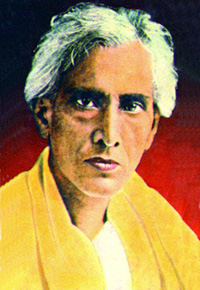
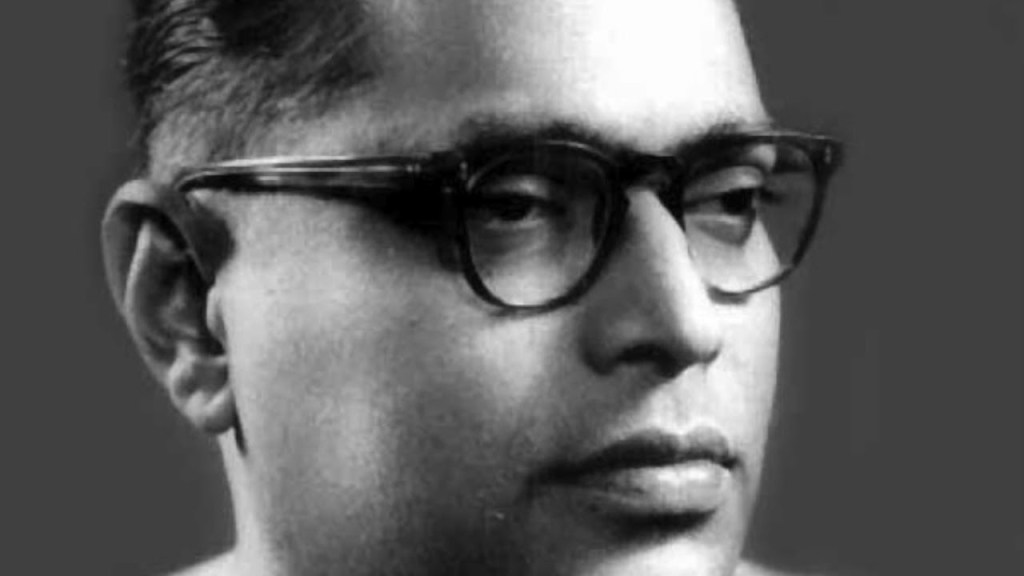
Known as “Father of Indian Chemistry”, Prafulla Chandra ( আচার্য প্রফুল্ল চন্দ্র রায় ) Ray was a notable Indian researcher and educator and one of the main “present day” Indian synthetic specialists.

He found the steady compound mercurous nitrite in 1896 and set up Bengal Chemical and Pharmaceutical Works Ltd, India’s first pharmaceutical organization in 1901.

Additionally an energetic and committed social laborer, he didn’t bolster the rank framework.

Early Life and Education:

Prafulla Chandra Ray was conceived on 2 August 1861, the more youthful of two siblings, in the town of Raruli-Katipara, presently in Bangladesh. His dad, Harish Chandra Ray was a proprietor who cherished learning and he developed a broad library in his home. Prafulla’s mom, Bhubanmohini Devi was knowledgeable with liberal perspectives.

The family moved to Kolkata when Prafulla was nine years of age and he went to the Hare School. Lamentably, Prafulla became sick and come back to his town in 1874. It took two years for Prafulla to recuperate and he was left for all time delicate with stomach related problems and a sleeping disorder. During his recuperation he appreciated perusing in his dad’s well prepared library.

He came back to Kolkata and went to Albert School and in 1879 and, in the wake of passing the selection test, started learns at the Metropolitan College (presently Vidyasagar College). Prafulla additionally considered science at the Presidency College and this before long turned into his preferred subject; he manufactured a research center at home and started testing.

In 1882, Prafulla won a grant to Edinburgh University, UK and he picked up his degree there in 1885. Staying at Edinburgh to embrace examine, he was granted a D. Sc. in 1887 and the “Expectation Prize” for his proposal on “Conjugated Sulfates of the Copper-Magnesium Group: A Study of Isomorphous Mixtures and Molecular Combinations”.

Commitments and Achievements::

Prafulla Ray came back to Calcutta in 1888 and turned into an associate teacher of Chemistry at the Presidency College in Calcutta in 1889. He set up an exploration lab and gradually accumulated a gathering of devoted understudies who looked into with him.

He distributed around 150 research papers during his lifetime. A large number of his articles on science were distributed in famous diaries of his time. His examination incorporated the revelation of the steady compound mercurous nitrite in 1896 while contemplating nitrite and hyponitrite mixes and their mixes.

He additionally investigated natural mixes containing sulfur, twofold salt, homomorphism and fluorination.

In 1892 with a little capital of 700 INR, he built up Bengal Chemical Works. It prospered under his administration. The organization at first created natural items and indigenous medications. In 1901 the undertaking turned into a restricted organization, Bengal Chemical and Pharmaceutical Works Ltd (BCPW) and India’s first pharmaceutical organization. Steadily, the organization extended and turned into a main synthetic concoctions and prescription maker.

Prafulla Ray was keen on old writings and after much research distributed “The History of Hindu Chemistry” in two volumes in 1902 and 1908. The work point by point the broad learning of metallurgy and medication in antiquated India.

In 1916 Prafulla Ray resigned from President College and joined Calcutta University where he worked for over 20 years.

He spoke to numerous Indian colleges at universal courses and congresses. He was chosen as the Indian Science Congress President in 1920.

His collection of memoirs “Life and Experiences of a Bengali Chemist”, distributed in two volumes in 1932 and 1935 reports his very own inspirations as a researcher and the far reaching developments India was encountering during his lifetime.

Prafulla Ray needed to utilize the wonders of science for lifting up the majority. He was an energetic and given social laborer and he took an interest energetically and effectively in helping starvation and flood struck individuals in Bengal during the mid 1920s. He advanced the khadi material and furthermore settled numerous different enterprises, for example, the Bengal Enamel Works, National Tannery Works and the Calcutta Pottery Works. He was a genuine realist and he was totally again the station framework and other nonsensical social frameworks. He tirelessly carried on this work of social transformation till he passed away.

Staying an unhitched male for an incredible duration, Prafulla Ray resigned turning out to be educator emeritus in 1936 matured 75. He passed on 16 June 1944, matured 82.

Sister Nivedita biography

Margaret Elizabeth Noble, otherwise called Sister Nivedita  ( সিস্টার নিবেদিতা ), was conceived in Ireland. Her dad, Samuel Richard Noble, was a minister in some poor ward in Ireland.

Margaret, the oldest girl, was given to her dad’s beliefs and dreams; and she got the soul of self­less assistance. At six years old, she figured out how to peruse the Bible, and offered to visit the old and wiped out individuals and read the blessed book resoundingly to them.

Margaret started composing at twenty years old. She met Swami Vivekananda in England, and was tremendously influ­enced by his standards and addresses. She came to India in 1898, and remained in a place of the Ramakrishan Mission at Baghbazar, Calcutta. From that point forward, she came to be known as ‘Sister Nivedita’.

Commercials:

Nivedita began a young ladies’ school in the area, and started to show little youngsters who were in those days not permitted to examine in a school. Sister Nivedita used to go by and by to the guardians, and mentioned them to enable their little girls to go to the school. Also, she committed herself in numerous other social works and turned out to be firmly associated with Indian patriotism, as she adored India. ‘

When Aurobindo Ghosh left for Pondichery, being pursued by the British Intelligence Agency for his risky fear monger exercises, Sister Nivedita assumed control over the charge of altering his prominent diary, Karma Yogin, in his nonattendance.

Sister Nivedita cherished India as her country, and the Indians as her siblings and sisters. She kicked the bucket in Calcutta at the age of forty-four.

Aurobindo Ghose biography

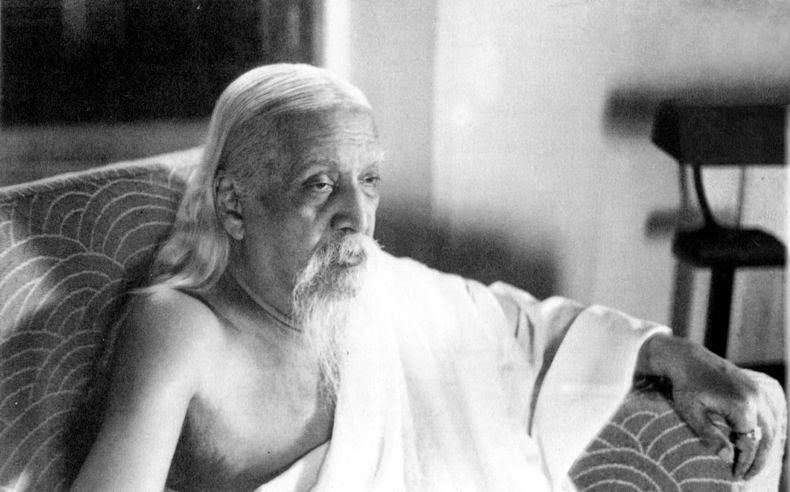
Aurobindo Ghose ( অরবিন্দ ঘোষ ) can be known as a progressive parsimonious who master beat direct political activity than moderate reformism yet finished being a plain, spreading the message of perfect harmony and love. As a progressive, he is respected in India for his nationalistic intensity yet as a scholar, the world appreciates him for his heavenly vision. Intense however his exercises were, they couldn’t keep going long. After the 1907 subversion case there came an abrupt change in his life. He cruised for Pondicherry in 1910, set up an ashram there and embraced the steady existence of a logician mastermind.

Sri Aurobindo attempted to absorb Indian and Western philosophical musings and discover the ways of awesome fellowship and profound acknowledgment. He had confidence in profound and social development of man alongside achievement of common objectives.

Sri Aurobindo was conceived in Calcutta. He was taught first at Darjeeling, at that point was sent to England. He passed his ICS however couldn’t savor serving the British realm. He worked for quite a while with sister Nivedita.

Maharshi Aurobindo stayed essentially at Pondicherry and was immersed in contemplation. The ashram was taken care of by ‘Mama’, the mother. Hit ashram draws in guests from everywhere throughout the world. Indeed, even today the ashram is a focal point of reflection and a seat of concentrates on Aurobindo.

Sarat chandra Chattopadhyay

Saratchandra Chattopadhyay ( শরৎচন্দ্র চট্টোপাধ্যায় )was conceived on September 15, 1876 at Devanandapur in the Hooghly region of West Bengal. His dad was Motilal Chattopadhyay and mother was Bhubanmohini. Saratchandra burned through the greater part of his adolescence with his mom at her family’s home in Bhagalpur, Bihar, from where he passed the University Entrance assessment. Despite the fact that he likewise went to school for around two years, he couldn’t finish the examinations. At 27 years old he went to Burma and got a new line of work as a representative in an administration office at Rangoon. He left Rangoon in 1916 and settled, first at Baje Shibpur, Howrah, close to Kolkata. And afterward, around ten years after the fact, he moved to his own home in Samtabed, a town on the banks of the Rupnarayan. Some time before his demise he had constructed another house in Kolkata. He passed on in Kolkata on January 16, 1938.

His first short story was distributed in 1903 under his uncle’s name Surendranath Ganguli. Baradidi, a novella, rather a long short-story, was distributed in 1907, presently under his very own name, in Bharati. While in Burma, he kept overhauling the drafts of a considerable lot of his compositions that he had first written down at Bhagalpur, simultaneously he took a shot at making new fiction. To be sure, the absolute most charming characters he made, to be specific “Indranath” of Srikanta (1917), or “Lalu” of Chhelebelar Galpa (distributed as a book three months after his demise in 1938) depended on his companion Rajendranath Majumdar or Raju of Bhagalpur. Since 1913, and especially after 1916, Saratchandra’s distinction has been solidly settled. He has been en incredibly well known creator from that point onward. Among his books are Devdas (written in 1901 however distributed in 1917), Parineeta (1914), Biraj Bou (1914), Palli-Samaj (1916), Srikanta (in four sections; 1917, 1918, 1927, 1933), Charitraheen (1917), Grihadaha (1919), Pather-Dabi (1926), Shesh Prashno (1931), Bipradas (1935). Saratchandra’s works have been over and again converted into numerous Indian dialects. A significant number of these have additionally been effectively sensationalized in front of an audience and adjusted to films.

Jamini Roy biography

Stroll into a normal white collar class craftsmanship adoring family of West Bengal, and chances are that you may go over a well-safeguarded representation of Jamini Roy ( যামিনী রায় ) instead of an extravagant looking work of art of one of India’s numerous advanced specialists. The artworks must be well-safeguarded, for Jamini Roy would not have sold his work, had he questioned his purchaser’s enthusiasm for craftsmanship. While a large portion of the Indian painters of the twentieth Century were amped up for present day craftsmanship, which brought them great returns, Jamini Roy stood apart for his adoration towards Indian roots. His enthusiasm for basic Indian society workmanship was with the end goal that he couldn’t have cared less about selling his works at extravagant costs and just sold them for as meager as 350 rupees. What’s more, he would repurchase his works, should he discover that his artistic creations are kept up ineffectively by the purchaser. Affected by the straightforwardness of Kalighat depictions (Indian people workmanship), Jamini Roy abandoned current craftsmanship and adhered to his underlying foundations, winning a large number of hearts all the while. He additionally abandoned utilizing European paints and even canvases to supplant them with appropriate other options. In 1954, the Government of India regarded him with Padma Bhushan for his commitment towards craftsmanship.

Youth and Early Life

Jamini Roy was conceived in the year 1887 at Beliatore town in the Bankura locale of West Bengal. Roy was naturally introduced to a well-to-do group of land-proprietors. His dad, Ramataran Roy, left his taxpayer driven organizations to seek after his enthusiasm for craftsmanship. In the year 1903, when he was just 16 years of age, Jamini Roy left his town and made it right to Calcutta (presently Kolkata) to enlist himself at the Government College of Art. There, he got training under Abanindranath Tagore, renowned for his important commitment in the field of present day workmanship. Tagore was the bad habit head of the school and prepared Roy according to the common scholastic custom. Roy completed his training in 1908 and was given a Diploma in Fine Arts. Roy was consistent with the workmanship that he learned and began painting as per the Western old style. In any case, he straightaway understood that his heart had a place with some other type of workmanship.

Profession

Jamini Roy began his profession as a picture painter yet wasn’t totally cheerful about being a representation painter who worked for commission. It was in the year 1925 that he heard his actual calling outside the well known Kalighat sanctuary in Calcutta. In the wake of watching a couple Kalighat works of art, showed outside the sanctuary, Jamini instinctually realized what his inclination and intrigue was, the point at which it came to craftsmanship. He realized that the Bengali society craftsmanship could be utilized as a stone to cut down not two but rather three feathered creatures – an approach to disentangle and depict the lives of ordinary citizens; to make his specialty available to all; to bring back the magnificence of Indian workmanship. From that minute onwards, his works of art began mirroring the Kalighat style of workmanship. By the mid 1930s, Jamini Roy turned out to be completely acquainted with the lines of the Kalighat figure of speech and delivered increasingly number of craftsmanships. In 1938, his fine arts turned into the primary Indian works of art to be shown at a British-governed road in Calcutta. Jamini’s point of view started to hold up under natural product during the 1940s when his works were purchased by normal white collar class Indians. What shocked him however was the intrigue appeared by the European people group towards obtaining his canvases. With the progression of time, his artistic creations were just mirroring the indigenous craft of Kalighat painting, alongside the earthenware’s of the Bishnupur sanctuary. In the next years, his works were displayed at renowned shows in spots like London and New York City. At this point, Jamini Roy had achieved what he had planned to do when he previously exchanged over from the Western traditional styleto the society specialty of Bengal.

Prasanta Chandra Mahalanobis

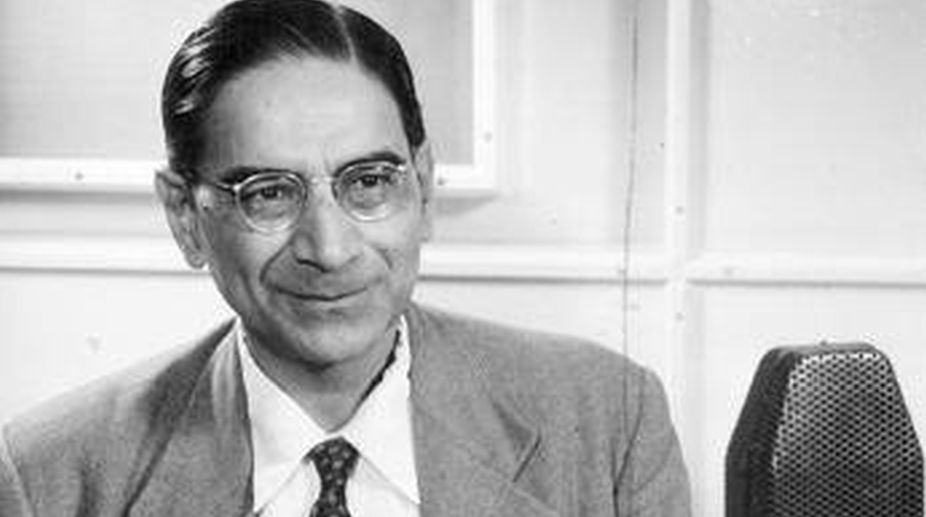
Prasanta Chandra Mahalanobis  ( প্রশান্ত চন্দ্র ) FRS (29 June 1893 – 28 June 1972) was an Indian researcher and applied analyst. He is best associated with the Mahalanobis separation, a factual measure and for being one of the individuals from the main Planning commission of free india. He made spearheading contemplates in anthropometry in India. He established the Indian Statistical Institute, and added to the structure of enormous scale test overviews.

Early life

Mahalanobis had a place with a group of Bengali landed upper class who lived in Bikrampur (presently in Bangladesh). His granddad Gurucharan (1833–1916) moved to Calcutta in 1854 and developed a business, beginning a scientific expert shop in 1860. Gurucharan was affected by Debendranath Tagore (1817–1905), father of the Nobel Prize–winning writer, Rabindranath Tagore. Gurucharan was effectively engaged with social developments, for example, the Brahmo Samaj, going about as its Treasurer and President. His home on 210 Cornwallis Street was the focal point of the Brahmo Samaj. Gurucharan wedded a widow, an activity against social customs.

His senior child Subodhchandra (1867–1953) turned into a recognized instructor in the wake of examining physiology at Edinburgh University. He was chosen as a Fellow of the Royal Society of Edinburgh.[1] He was the Head of the Dept. of Physiology, University of Cardiff (the primary Indian to possess this post in a British college). In 1900, Subodhchandra came back to India, establishing the Dept. of Physiology in the Presidency College, Calcutta. Subodhchandra likewise turned into an individual from the Senate of the Calcutta University.

Gurucharan’s more youthful child, Prabodh Chandra (1869-1942) was the dad of P. C. Mahalanobis. Conceived in the house at 210 Cornwallis Street, P. C. Mahalanobis, experienced childhood in a socially dynamic family encompassed by savvy people and reformers.

Mahalanobis got his initial tutoring at the Brahmo Boys School in Calcutta, graduating in 1908. He joined the Presidency College, Calcutta where he was instructed by educators who included Jagadish Chandra Bose, and Prafulla Chandra Ray. Others going to were Meghnad Saha, a year junior, and Subhas Chandra Bose, two years his lesser at school. Mahalanobis got a Bachelor of Science certificate with distinction in material science in 1912. He left for England in 1913 to join the University of London.

In the wake of missing a train, he remained with a companion at King’s College, Cambridge. He was intrigued by King’s College Chapel and his host’s companion M. A. Candeth proposed that he could have a go at joining there, which he did. He did well in his investigations at King’s, yet in addition checked out crosscountry strolling and punting on the stream. He collaborated with the scientific virtuoso Srinivasa Ramanujan during the last’s time at Cambridge. After his Tripos in material science, Mahalanobis worked with C. T. R. Wilson at the Cavendish Laboratory. He enjoyed a short reprieve and went to India, where he was acquainted with the Principal of Presidency College and was welcome to take classes in material science.

In the wake of coming back to England, Mahalanobis was acquainted with the diary Biometrika. This intrigued him so much that he purchased a total set and took them to India. He found the utility of measurements to issues in meteorology and human studies, starting to deal with issues on his adventure back to India.

In Calcutta, Mahalanobis met Nirmalkumari, little girl of Herambhachandra Maitra, a main educationist and individual from the Brahmo Samaj. They wedded on 27 February 1923, despite the fact that her dad didn’t totally affirm of the association. He was worried about Mahalanobis’ resistance to different provisions in the participation of the understudy wing of the Brahmo Samaj, including forbiddances against individuals’ drinking liquor and smoking. Sir Nilratan Sircar, P. C. Mahalanobis’ maternal uncle, partook in the wedding service instead of the dad of the lady of the hour.

Indian Statistical Institute

Numerous associates of Mahalanobis looked into measurements. A casual gathering created in the Statistical Laboratory, which was situated in his room at the Presidency College, Calcutta. On 17 December 1931 Mahalanobis assembled a conference with Pramatha Nath Banerji (Minto Professor of Economics), Nikhil Ranjan Sen (Khaira Professor of Applied Mathematics) and Sir R. N. Mukherji. Together they built up the Indian Statistical Institute (ISI), and officially enrolled on 28 April 1932 as a non-benefit dispersing learned society under the Societies Registration Act XXI of 1860.

The Institute was at first in the Physics Department of the Presidency College; its consumption in the primary year was Rs. 238. It steadily developed with the spearheading work of a gathering of his associates, including S. S. Bose, J. M. Sengupta, R. C. Bose, S. N. Roy, K. R. Nair, R. R. Bahadur, Gopinath Kallianpur, D. B. Lahiri and C. R. Rao. The establishment additionally increased significant help through Pitamber Pant, who was a secretary to Prime Minister Jawaharlal Nehru. Gasp was prepared in insights at the Institute and took a distinct fascination for its undertakings.

In 1933, the Institute established the diary Sankhya, along the lines of Karl Pearson’s Biometrika.

The establishment began a preparation segment in 1938. Huge numbers of the early specialists left the ISI for professions in the United States and with the legislature of India. Mahalanobis welcomed J. B. S. Haldane to go along with him at the ISI; Haldane joined as a Research Professor from August 1957, remaining until February 1961. He left the ISI because of dissatisfactions with the organization and conflicts with Mahalanobis’ approaches. He was worried about the successive voyages and nonappearance of the executive and grumbled that the “… journeyings of our Director characterize a novel irregular vector.” Haldane helped the ISI create in biometrics.

In 1959, the organization was proclaimed as a foundation of national significance and an esteemed college.

Commitments to insights

Mahalanobis separation

A chance meeting with Nelson Annandale, at that point the executive of the Zoological Survey of India, at the 1920 Nagpur session of the Indian Science Congress prompted Annandale soliciting him to dissect anthropometric estimations from Anglo-Indians in Calcutta. Mahalanobis had been affected by the anthropometric investigations distributed in the diary Biometrika and he posed the inquiries on what variables impact the development of European and Indian relationships. He needed to analyze if the Indian side originated from a particular stations. He utilized the information gathered by Annandale and the position explicit estimations made by Herbert Risley to concoct the end that the example spoke to a blend of Europeans chiefly with individuals from Bengal and Punjab yet not with those from the Northwest Frontier Provinces or from Chhota Nagpur. He additionally inferred that the intermixture more as often as possible included the higher ranks than the lower ones. This examination was portrayed by his first logical paper in 1922. Throughout these investigations he found a method for contrasting and gathering populaces utilizing a multivariate separation measure. This measure, indicated “D2” and now eponymously named Mahalanobis separation, is autonomous of estimation scale. Mahalanobis additionally checked out physical human studies and in the precise estimation of skull estimations for which he built up an instrument that he called the “profiloscope”.

Test reviews

His most significant commitments are identified with enormous scale test overviews. He presented the idea of pilot overviews and supported the value of examining strategies. Early reviews started somewhere in the range of 1937 and 1944 and included subjects, for example, shopper use, tea-drinking propensities, general assessment, crop real esatate and plant illness. Harold Hotelling expressed: “No method of irregular example has, so far as I can discover, been created in the United States or somewhere else, which can contrast in precision and that portrayed by Professor Mahalanobis” and Sir R. A. Fisher remarked that “The ISI has led the pack in the first advancement of the strategy of test studies, the most strong reality discovering process accessible to the organization”.

He presented a technique for assessing harvest yields which included analysts examining in the fields by cutting yields around of distance across 4 feet. Others, for example, P. V. Sukhatme and V. G. Panse who started to deal with harvest studies with the Indian Council of Agricultural Research and the Indian Agricultural Statistics Research Institute proposed that a review framework should utilize the current managerial structure. The distinctions in supposition prompted sharpness and there was little collaboration among Mahalanobis and rural research in later years.

Later life

In later life, Mahalanobis was an individual from the arranging commission contributed conspicuously to recently autonomous India’s five-year plans beginning from the second. In the second five-year plan he underscored industrialisation based on a two-area model. His variation of Wassily Leontief’s Input-yield model, the Mahalanobis model, was utilized in the Second Five Year Plan, which progressed in the direction of the fast industrialisation of India and with different partners at his establishment, he assumed a key job in the advancement of a factual framework. He urged a venture to survey deindustrialisation in India and right some past evaluation technique blunders and endowed this task to Daniel Thorner.

Mahalanobis likewise had a standing enthusiasm for social interests and filled in as secretary to Rabindranath Tagore, especially during the last’s remote voyages, and furthermore worked at his Visva-Bharati University, for quite a while. He got one of the most elevated non military personnel grants, the Padma Vibhushan from the Government of India for his commitment to science and administrations to the nation.

Mahalanobis kicked the bucket on 28 June 1972, a day prior to his seventy-ninth birthday celebration. Indeed, even at this age, he was as yet dynamic doing examination work and releasing his obligations as the Secretary and Director of the Indian Statistical Institute and as the Honorary Statistical Advisor to the Cabinet of the Government of India.

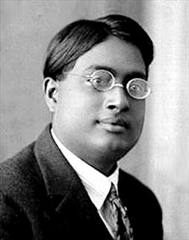
Satyendra Nath Bose Biography, Life, Interesting Facts


Satyendra Nath Bose ( সত্যেন্দ্রনাথ বসু )was a well known Indian Physicist whose most unmistakable commitment is to the field of science including quantum mechanics. Other than being a physicist, he was likewise cultivated and knowledgeable in different fields of science, for example, human studies, zoology, arithmetic, science, and science to give some examples.

He was named after the bosons, one of the subatomic particles in molecule material science to pay tribute to his commitment to the field of physical science.

He wedded Ushabati Gosh in 1914 when he was 20 years of age. During their marriage, they had nine youngsters together of which 2 of them passed on at an early age.

Bose kicked the bucket on February 4, 1974, in his old neighborhood at Kolkata, India. He was at 80 years old at the hour of his passing.

The Birth of a Genius

Conceived on January 1, 1894, in Calcutta (Kolkata at present), Satyendra Nath Bose was the most established youngster in the family just as the main kid. Pursued by six different sisters, their hereditary home is a little town of Bara Jagulia situated in the locale of Nadia, West Bengal.

He began tutoring close to his home at 5 years old before his family moved to Goabangan where he was enlisted at New Indian School. He later moved to Hindu School, one of the most seasoned and lofty schools in India. He passed the placement tests in 1909 with a high imprint and was positioned fifth among the top passers.

Moving from Hindu School, Satyendra Nath Bose selected to Presidency College in Calcutta where he was instructed actually by unmistakable Indian characters, for example, included Jagadish Chandra Bose, Prafulla Chandra Ray, and Sarada Prasanna Das.

He accomplished his BS in Mixed Mathematics at Presidency College in 1913 which he kept on pursueing to a graduate degree that he achieved in Calcutta University in1915. Bose passed the tests in Calcutta University as well as holds the record for the most elevated accomplished score on the tests which is yet to be outperformed right up ’til today.

Bose and the Quantum Theory

Satyendra Nath Bose worked with Meghnad Saha on the relativity of material science and quantum mechanics which was an unmistakable point in the field of science during the time. It was the time of an achievement revelation seemingly within easy reach with a ton of hypotheses being exhibited. Bose and Saha were the ones liable for the interpretations of incredibly famous German physicist Albert Einstein ‘s chip away at general relativity.

Bose worked in the University of Calcutta as a teacher in the Physics Department. While working there, he composed a paper with respect to the Law of Planck’s Quantum Radiation. His scholarly work played a basic factor with quantum material science. Bose straightforwardly sent the letter to Einstein who made an interpretation of and submitted it to the Zeitschrift für Physik, a progression of gathered logical distributions in Germany. He was later named for a Nobel Prize for his work regarding the matter.

Due to his production and Einstein’s help, Satyendra Nath Bose figured out how to function with conspicuous logical figures, for example, Marie Curie and Louis de Broglie. He worked in the crystallography and x-beam research facilities in Europe for a long time.

Kazi Nazrul Islam biography

This is a piece of the sonnet of Kazi Nazrul Islam ( কাজী নজরুল ইসলাম ).  He was detained, tortured,poisoned gradually, still he didn’t quit any pretense of battling for the nation he cherished. This is one of the attributes of a person that makes him interminable. His name will stay in the hearts of individuals for a long time into the future.

He was conceived on the 25th May 1899 of every a little town named Churulia close Asansol,Burdwan area of unified Bengal, in India.His father was Kazi Faqeer Ahmad.He was the Imam and overseer of the nearby mosque and sepulcher. He had two siblings and a sister. He considered in a madrassah ‘It was controlled by the mosque. He figured out how to peruse the Quran at an early age. He was just ten years of age, when his dad kicked the bucket. He began working in his dad’s place to help his family. In a brief timeframe he had the option to take the activity of the Muezzin in the mosque where he considered.

In spite of his poverty,he kept on contemplating. He worked with dramatic gatherings. He took in the specialty of composing poetry,drama and writing. He made solid obnoxious ambushes against the British Raj in India. He lectured upset through his beautiful works.’ Bidrohi,the Rebel’ was his most well known Bengali poem.It was gathered in a volume titled,”Agnibeena” in 1924. The main compilation of his sonnets.

His sonnets portrayed components of romanticism,heroism and love.He called for insubordination to all types of abuse including the abusive demonstrations of the British Raj in India. It is accepted he got his motivation from Walt Whitman’s ,’Song of Myself’.

His activism landed him in jail. He composed ‘Affidavit of a Political Prisoner’, while in jail. He worked for the opportunity of the discouraged masses in India.

He took on schools at whatever point he was fit for paying the fees,he wanted to consider . He had an unquenchable hunger for knowledge,which he obtained at whatever point he got the chance.

All through his vocation he composed short stories,novels and essays.He was notable for his lyrics. He composed and made music for about 4,000 melodies.

At age eighteen,he joined the Indian armed force. He joined up with the British armed force for two reasons; his tendency to examine the unknown,secondly the call of legislative issues. He was posted in Karachi cantonment. He composed his first writing and verse in Karachi. He read broadly and was affected by Tagore and Saratchandra Chattopadhay,also the Persian writers, for example, Hafez,Rumi and Omar Khayyam. He took in Persian verse from the regiments Punjabi Maulvi. He rehearsed music and sought after his artistic advantages.

At the age of forty three this dynamic artist lost his voice and was quieted forever,he additionally lost his memory. He passed on in Bangladesh in 1976 at the age of seventy-seven!

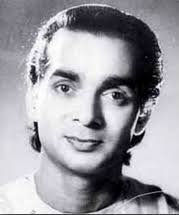
Uday Shankar biography

Uday Shankar, ( উদয় শঙ্কর ) (conceived Dec. 8, 1900, Udaipur, India—kicked the bucket Sept. 26, 1977, Calcutta), significant artist and choreographer of India whose adjustment of Western showy strategies to customary Hindu move advanced the old work of art in India, Europe, and the United States.

Shankar started formal workmanship preparing in Bombay in 1917 and after two years learned at the Royal College of Art in London. During the 1920s he hit the dance floor with the ballet performer Anna Pavlova and made two moves, Hindu Wedding and the two part harmony Radha and Krishna, for consideration in her program Oriental Impressions. Coming back to India in 1929, Shankar shaped his own move organization. His troupe visited Europe in 1930 and from 1932 until the 1960s consistently showed up in the United States. In 1938 he established the Uday Shankar India Culture Center in Almora, Uttar Pradesh. (The school for move, dramatization, and music shut during World War II yet revived in 1965 in Calcutta.) Together with his sibling, the sitarist Ravi Shankar, he investigated old style and people move and made move shows that included social remark. In spite of the fact that Shankar’s work was reprimanded by followers of conventional Indian move, his supporters included such prominent Indians as the writer Rabindranath Tagore.

Pankaj Mullick biography

Pankaj Mullick ( পঙ্কজ মল্লিক ), otherwise called Pankaj Kumar Mullick was a famous Bengali Indian music writer and playback vocalist, who was a pioneer of film music in Bengali film and Hindi film at the appearance of playback singing, just as an early type of Rabindra Sangeet.

He was granted the Padma Shri in 1970,[5] pursued by the Dadasaheb Phalke Award (India’s most noteworthy honor in film, given by the Government of India) in 1972 for lifetime commitment to Indian cinema.

Early life and preparing

He was conceived in Kolkata in 1905, to Monimohan Mullick and Monomohini, his dad had a profound enthusiasm for customary Bengali music. He began his initial preparing in Indian traditional music under the tutelage of Durgadas Bandyopadhyaya, he learned at the Scottish Church College of the University of Calcutta.[7] A significant defining moment in his life came when, in the wake of completing his examinations, he interacted with Dinendranath Tagore, who was Rabindranath Tagore’s terrific nephew; this prompted Pankaj Mullick’s enduring enthusiasm for Rabindra Sangeet. Rabindranath Tagore, thus, became partial to him, and soon Mullick wound up known as one of the main examples of Tagore’s melodies

Profession

Tagore’s tune Nemecche Aaj Prothom Badal turned into his first business recording, with the Kolkata-based Videophone Company in 1926, at eighteen years old; this was the first of numerous collections which made him a commonly recognized name in Rabindra sangeet.

He began his profession with the Indian Broadcasting Corporation in Calcutta in 1927, the precursor of All India Radio (AIR), alongside arranger R. C. Boral, where he contributed as a music chief and craftsman for about fifty years.

He contributed in different abilities to Bengali, Hindi, Urdu and Tamil language films for a long time, beginning in 1931, he functioned as music chief to craftsmen like K.L. Saigal, S.D. Burman, Hemanta Mukherjee, Geeta Dutt and Asha Bhosle. He acted with well known film entertainers like K L Saigal, P.C. Barua and Kanan Devi. Alongside Nitin Bose and his famous sound designer sibling Mukul Bose, Mullick presented playback singing in Indian cinema.[3]

He worked with one of the early film studios, New Theaters Calcutta for a long time.

Design a site like this with WordPress.com
Get started