Mother Teresa’s Sadness

At the point when I was in graduate school at Rutgers University, one of my educators passed out duplicates of an article called “The Ghoul of Calcutta” about Mother Teresa ( মাদার টেরেসা ). The article was composed by Christopher Hitchens who has been called an enemy of catholic crusader just as a mouthpiece for left wing governmental issues. That was in 1992, and until a couple of days prior, I’d disregarded the article and about its analysis of Mother Teresa.

In any case, Sunday a companion gave me a short article about Mother Teresa and the production of her own letters where she portrayed her downturn, her otherworldly battles and her decision that there might be no God. She had lost confidence, as indicated by her own words. The article pondered the a long time since the distribution of Teresa’s once secret letters and featured the speculations that individuals who appreciate her have offered with all due respect.

I myself think that its hard to censure Mother Teresa. One book I read about her when I was a youngster portrayed the primary home for the perishing she created in Calcutta in 1952. The city enabled her to utilize an abandoned Hindu sanctuary, and Teresa’s objective moved toward becoming to enable the perishing to bite the dust with respect. Her way of thinking enabled individuals of various religions to rehearse the ceremonies of their own confidence: her sisters read the Quran to the Muslim individuals, Hindus were washed in water from the Ganges, and the Last Rites were given to Catholics. This training appears to exhibit regard for individuals who walk various ways to God.

One of the reactions of Mother Teresa and the Sisters of Charity was that, despite the fact that she offered individuals the chance to bite the dust with respect, she didn’t offer them conceivably lifesaving restorative treatment. Another analysis was that Mother Teresa disheartened her sisters from getting medicinal preparing to more readily help the evil. In spite of the fact that I comprehend these reactions, I think individuals need to take an all encompassing perspective on Teresa so as to get her and her destinations.

Mother Teresa was conceived in what is presently Macedonia in 1910; her dad was a legislator who was killed in 1919 when she was 8. The Russian Revolution had happened in 1917 and the whole territory, including Macedonia, was experiencing monstrous political and social change. She experienced childhood in when life implied not as much as philosophy, and passing was desirable over existence without trust. By age 12, she needed to devote her life to poor people, and by 18 had ventured out from home never to see her mother or kin again. At the point when Teresa got to Calcutta, she met individuals who lived in the most terrible conditions and who were kicking the bucket of excruciating and degenerative sicknesses in the boulevards. She depicted one individual in her Nobel Peace Prize discourse, saying, “I accomplished for her everything that my affection can do. I put her in bed, and there was such an excellent grin all over. She grabbed hold of my hand, as she said single word just: Thank you- – and she kicked the bucket.” In that equivalent discourse, she depicted a man she’d helped, “…that man whom we got from the channel, half eaten with worms, and we carried him to the home. I have lived like a creature in the road, yet I am going to bite the dust like a blessed messenger, cherished and thought about.” I think Teresa saw individuals whose lives had offered them nothing and for whom demise would have been a consolation. I surmise I comprehend this since somebody in my very own family who I cherished particularly had lung malignant growth. He was kicking the bucket and had declined further treatment. He felt that leaving this world would be desirable over living in torment and without trust.

People are results of their societies and their ages; therefore I comprehend that Teresa clung firmly to numerous nineteenth Century thoughts. Despite the fact that I don’t concur with a portion of Teresa’s convictions, I do comprehend that once disguised, our dreams of the world are hard to save. When she experienced childhood in Europe, Eschatology or the Christian enthusiasm for the joy of paradise and the rejection of all the torment of enduring of this world was reassuring and elevating. No big surprise Blessed Teresa thought biting the dust with poise was desirable over life despondently.

However, returning to Teresa’s downturn, a few people ascribe her despondency to clinical, synthetic wretchedness to which she was hereditarily inclined. Some state she was experiencing extraordinary, expanded fatigue that imitated the side effects of profound gloom and shut her capacity to contact God in petition. The philosophical clarification is that Blessed Teresa was on an adventure through the Dark Night of the Soul as showed by John of the Cross that includes the breaking down of all our human ideas of God so as to build up a more noteworthy association with God: she lost her capacity to implore as all of us do on the grounds that she was getting ready to encounter a genuine mixing with God. Whatever the explanation behind her hopelessness, she was absolutely the vehicle for human sympathy. Further, how might anybody, even a potential holy person, live amidst so a lot of distress and depression and rottenness and dismissal forever thus much scorn for humankind without feeling lost confidence or the fatigue of the human spirit.

The Biography of Pandit Ravi Shankar

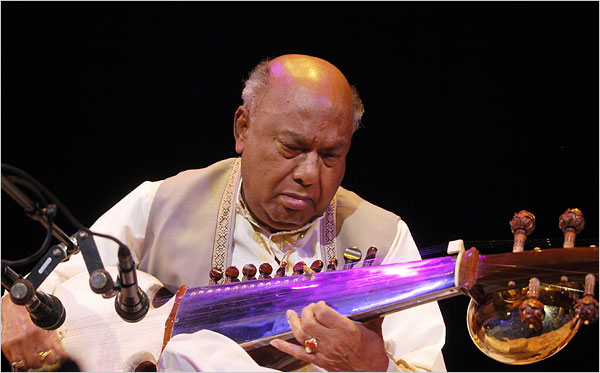
Pandit Ravi Shankar( পন্ডিত রবি শঙ্কর ), the Indian Sitar Maestro passed away in California today. He is credited to be the man who took Indian Music to world statures.

He was conceived as conceived Robindro Shaunkor Chowdhury, on 7 April 1920 at Varanasi in a conventional Bengali Brahmin Family and was the most youthful of seven siblings.

At ten years old, subsequent to going through his first decade in Varanasi, Shankar went to Paris with the move gathering of his sibling, choreographer Uday Shankar. By the age of 13 he had turned into an individual from the gathering, went with its individuals on visit and figured out how to move and play different Indian instruments.

He was prepared by lead artist for the Maihar court, Allauddin Khan during a world visit and later at Maihar in Satna locale of Madhya Pradesh.

Khan was a thorough educator and Shankar had preparing on sitar and surbahar, learned ragas and the melodic styles dhrupad, dhamar, and khyal, and was shown the systems of the instruments rudra veena, rubab, and sursingar. He regularly contemplated with Khan’s kids Ali Akbar Khan and Annapurna Devi, whom he later wedded.

Early Days

In 1944, he moved to Mumbai where Shankar recomposed the music for the prominent tune “Sare Jahan Se Achcha” at 25 years old in particular.

He started to record music for HMV India and functioned as a music chief for All India Radio (AIR), New Delhi, from February 1949 to January 1956

At that point, he was at that point a built up Musician established the Indian National Orchestra at AIR. In his arrangements he joined Western and traditional Indian instrumentation.

In 1971, Shankar and Beatles guitarist George Harrison composed and played at a raising support show to help the war and starvation casualties of Bangladesh, bringing forth the cutting edge megastar advantage show.

Pandit Ravi Shankar’s relationship with the Beatles made him a commonly recognized name in the West and made “a torrential slide of such tests in the stone and pop world,”

In view of the impact Mr. Shankar applied on artists everything being equal and nationalities, George Harrison considered the sitarist the “adoptive parent of world music.”

Ravi Shankar has likewise formed for ballet performances and movies in India, Canada, Europe and the United States. The last of which incorporates the movies “Charly,” “Gandhi,” and the “Apu Trilogy”.

In the time of the enlivening of the more youthful age in the mid 60’s, Ravi Shankar gave three significant shows – Monterey Pop Festival, Concert for Bangla Desh, and The Woodstock Festival.

Profoundly moved by the situation of in excess of 8,000,000 evacuees who came to India during the Bangla Desh Freedom battle from Pakistan, Ravi Shankar needed to help in any capacity he could. He intended to organize a show to gather cash for the displaced people. He moved toward his dear companion George Harrison to assist him with fund-raising for this reason. This helpful worry from Ravi Shankar planted the seed of the idea for the Concert for Bangla Desh. With the assistance of George Harrison, this show turned into the first magnus exertion in gathering pledges, making ready for some others to do philanthropy shows.

Individual Life

Pandit Ravi Shankar had a convoluted private life. His union with Annapurna Devi cut off in separate and stressed his association with her family. His child Shubhendra “Shubho” Shankar was conceived from Annapurna Devi.

He later went into an association with artist Kamala Sastri that kept going from the late 1960s to mid 1980s, and he started an issue with the wedded Sukanya Rajan, who played the tanpura at his shows and was 31 years his lesser.

Pandit Ravi Shankar wedded Sukankya Rajan in 1989 and had a girl Anoushka Shankar, who is likewise an unmistakable performer.

Throughout his visiting West, Pandit Ravi Shankar likewise started an association with show advertiser Sue Jones, and the couple, in 1979, had a girl, Geethali Nora Jones Shankar, otherwise called Norah Jones. Pandit Ravi Shankar had little job in bringing up his girl, who neglected to express gratitude toward her dad when she won various Grammys for “Leave Away With Me” in 2003. They were accounted for to have accommodated in later years.

Actually, Pandit Ravi Shankar was the genuine dad of three artists: his child Shubho, an Indian old style performer and painter, who passed on in 1992; Anoushka, who regularly performed two part harmonies with her dad; and Norah Jones, an eight-time Grammy Award-victor best known for her organization and exhibitions of lively famous melodies.

Shubhendra “Shubho” Shankar frequently went with his dad on tours.He could play sitar and surbahar, however chose not for seek after a performance vocation and passed on in 1992. His Daughter Norah Jones turned into an effective artist during the 2000s, winning eight Grammy Awards in 2003.

His little girl from Sukanya, Anoushka Shankar was named for a Grammy Award for Best World Music Album in 2003. Both Anoushka and her dad were named for Best World Music Album at the 2013 Grammy Awards for independent collections.

Grants and Recognition

Pandit Ravi Shankar was granted the three most elevated national common distinctions of India: Padma Bhushan, in 1967, Padma Vibhushan, in 1981, and Bharat Ratna, in 1999. He got the music grant of the UNESCO International Music Council in 1975, three Grammy Awards, and was selected for an Academy Award. Shankar got the Kalidas Samman from the Government of Madhya Pradesh for 1987–88, the Fukuoka Asian Culture Prize in 1991, the Ramon Magsaysay Award in 1992, and the Polar Music Prize in 1998.

In 1986 Ravi Shankar was designated as an individual from the Rajya Sabha, India’s upper place of Parliament.

Talking about his heritage a couple of years back, Mr. Shankar said he was proudest of having extended the open thought of what Indian raga music could be. “There is a great deal more — suggestive, sentimental, tragic, profound,” he told the distribution the World and I. “One beneficial thing is the individuals getting stoned don’t do that with my music any longer. I buckled down for that and accomplished it.”

Passing

On 6 December 2012, Ravi Shankar was admitted to Scripps Memorial Hospital in La Jolla, San Diego subsequent to whining of breathing challenges. He kicked the bucket on 11 December at around 16:30 Pacific Time (UTC−8). As indicated by his representative, Stuart Wolferman, Shankar kicked the bucket close to his home in Encinitas, California.

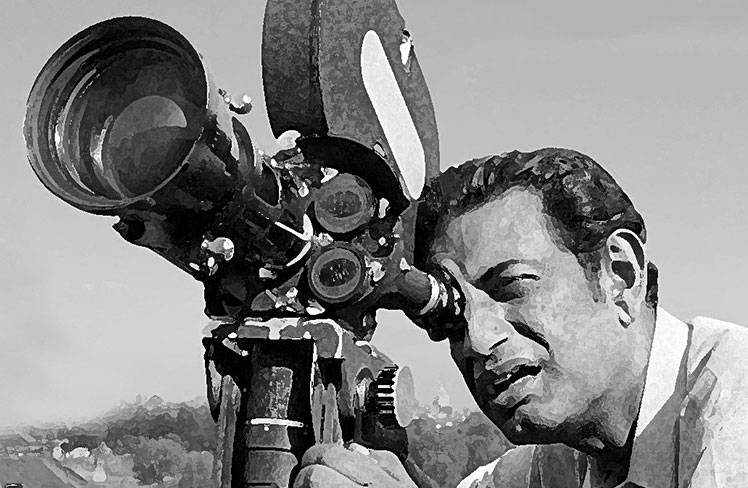
Satyajit Ray – A Short Biography

Satyajit Ray ( সত্যজিৎ রায় ) is prestigious personality and one of the not many of those individuals who left an ineradicable impression in the field they were a piece of. Satyajit Ray was an Indian movie executive, author, distributer, artist, visual creator and a film pundit. He had conceived on second May 1921 out of a Bengali family which is outstanding for its commitment to the field of expressions and writing. He was blessed to spend his developmental years under the direction of Rabindra Nath Tagore, India’s first Nobel laureate.

He began his profession as a lesser visualizer yet in 1943 he started to work with Signet Press as an artist. He structured the fronts of numerous world renowned books like “Man Eaters” and “Revelation of India”. He was propelled from motion picture “The Bicycle Thieves” in the wake of viewing to which he chose to enter in the field of film industry.

His introduction movie as an executive ‘Jaguar Panchalli’ won him numerous honors overall which was discharged in 1955. It was to be sure the start of marvel on the planet film. He before long went into the positions of first class movie producers because of his diligent work. He went onto produce 37 movies which incorporated the documentaries and short stories and furthermore films like Nayak which delineate human opinions towards general boosts.

He is known as one of the best criminologist and sci-fi essayist. He delineates his affection for science through his interesting short story motion pictures. He was likewise an incredible distributer. He distributed one of the most well known Bengali magazines for youngsters “Sandesh”. He was additionally a stunning artist as structured various Bengali typefaces alongside four Roman typefaces is well.

Satyajit Ray proceeded to get 32 National honors and various worldwide honors which included Golden Lion and Silver Bear, which happen to be one of the most lofty honors known to man. In 1992 he went to get privileged Oscar grant which is the best grant for any craftsman on this planet. He kicked the bucket on 23rd April 1992 in the wake of giving Indian Cinema another personality according to the world.

Hector M is an independent author, slanted to give the best off administrations to his customers.

Ali akbar khan

The child of persuasive Hindustani artist Allaudin Khan, Ali Akbar Khan ( আলী আকবর খান ) was one of the Eastern world’s most noteworthy artists. An ace of the sarod, a 25-stringed, lute-like, Indian instrument, Khan carried the Northern Indian old style music to the global stage. A five-time Grammy chosen one, Khan was called, by Yehudi Menuhin, “a flat out virtuoso, the best performer on the planet.” Tracing his familial roots to Mian Tansen, a sixteenth century artist in the court of Emperor Akbar, Khan started examining music at three years old. At first considering vocal music with his dad, he contemplated drums with his uncle, Fakir Aftabuddin. In spite of the fact that he had a go at playing a wide assortment of instruments, he felt most agreeable on the sarod. Preparing and rehearsing 18 hours per day, he gradually aced the instrument. In 1936, he made his open introduction during a show in Allahabad. In the mid ’40s, Khan turned into a court performer for the Maharaja of Judhpur. He before long obtained the title “Ustad” (ace performer).

In 1955, Khan acknowledged a greeting from Menuhin to perform in the United States. Notwithstanding performing at the Museum of Modern Art in New York, he recorded the main Western collection of Indian old style music and turned into the principal Indian music on an American TV when he showed up on Alistair Cooke’s Omnibus. In 1971, Khan performed with his brother by marriage, Ravi Shankar, during George Harrison’s Concert for Bangladesh at Madison Square Garden. Khan got various honors including the President of India Award in 1963, the Padma Vibhusan in 1988, the Bill Graham Lifetime Achievement grant in 1993, and the Asian Paints Shiromani Hall of Fame Award in 1997. He got the Kalidas Sanman from the Madya Pradesh Academy of Music And Fine Arts and turned into the principal Indian artist to be granted a MacArthur Foundation “Virtuoso Grant” in 1991. Khan got a National Heritage Fellowship from the National Endowment of the Arts in 1997.

In 1956, Khan established the Ali Akbar Khan College of Music in Calcutta. Educating in the United States since 1965, he opened the Ali Akbar College of Music in Berkeley, CA, after two years. (In 1968, the school moved to another site in San Rafael.) Khan showed six classes per week for nine months every year. In the mid ’90s, the school opened branches in Fremont, CA, and Basel, Switzerland. The long rundown of movies highlighting Khan’s music incorporates Chetan Anand’s Aandhiyan, Satyajit Ray’s Devi, and Bernardo Bertolucci’s Little Buddha. He got a Best Musician of the Year grant for his soundtrack for the film Khudita Pashan.

Uttam Kumar’s Popularity

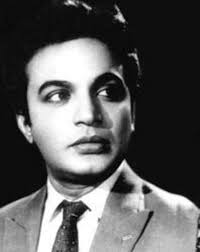
Uttam Kumar ( উত্তম কুমার ) was a well known Bengali on-screen character and artist, who was conceived on September 3, 1926. As an individual conceived on this date, Uttam Kumar is recorded in our database as the 27th most well known VIP for the afternoon (September 3) and the 74th most prevalent for the year (1926).

Individuals conceived on September 3 fall under the Zodiac indication of Virgo, the Virgin. Uttam Kumar is the 1167th most prevalent Virgo.

Beside data explicit to Uttam Kumar’s birthday, Uttam Kumar is the first most popular Bengali.

As a rule, Uttam Kumar positions as the 14011th most prominent renowned individual, and the 2368th most prevalent on-screen character ever. “The Famous Birthdays” inventories more than 25,000 well known individuals, everybody from on-screen characters to vocalists to researchers to sequential executioners and that’s only the tip of the iceberg. In case you’re interested to see who was conceived on your birthday, you can utilize our database to discover who, what, where, when and why. You can look by birthday, origination, specialty or some other data by composing in the inquiry box, or essentially peruse our site by choosing the month, the day, the horoscope, or some other interactive choice.

Find out about well known people’s keys to popularity, find intriguing random data and discover where they rank on a few kinds of graphs. Use it as fun data for a birthday party or a game at another sort of festivity. Start a scrapbook of everybody conceived on your birthday or give an endowment of a scrapbook of everybody conceived on a friend or family member’s birthday. Investigate the right now drifting famous people, the most well known birthday celebrations for a particular day or hop to an arbitrary or as of late included big name’s page in case you’re not searching for anything explicit.

Suchitra Sen biography

Sen was the primary Indian entertainer to get an honor at a worldwide film celebration when, at the 1963 Moscow International Film Festival, she won the Silver Prize for Best Actress for playing a disappointed alcoholic in Saptapadi. In 1972, she was granted the Padma Shri, one of the most noteworthy regular citizen grants in India. From 1979 on, she withdrew from open life and avoided all types of open contact; for this she is frequently contrasted with Greta Garbo. In 2005, she declined the Dadasaheb Phalke Award, the most noteworthy realistic honor in India, to avoid the open eye. In 2012, she was given the West Bengal Government’s most elevated respect: Banga Bibhushan.

Individual life and training

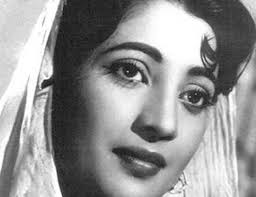
Suchitra Sen  ( সুচিত্রা সেন ) was conceived in Sen Bhanga Bari town of Belkuchi Upazila, presently in Sirajgonj District, Greater Pabna in the present day Pabna District of Bangladesh, on 6 April 1931. Her dad Late Karunamoy Dasgupta was the superintendent of the neighborhood school and her mom Late Indira Devi was a homemaker. She was their fifth kid and third little girl. Ms Sen is a Grand Daughter of Famous Poet Sree Rajonikant Sen. She got her proper training in Pabna. Parcel carried her family and her to West Bengal, where she wedded Dibanath Sen, child of affluent industrialist Adinath Sen, in 1947, and had one little girl, Moon Sen, who is a previous entertainer. Her dad in-law, Adinath Sen, was strong of her acting vocation in films after her marriage. Her industrialist spouse put a ton in her vocation at first and upheld her in every potential manners.

Sen had made an effective passage into Bengali movies in 1952, and afterward a less fruitful progress into the Hindi film industry. As per industrious however unverified reports in the Bengali press, her marriage was stressed by her achievement in the film business .

Profession

Suchitra Sen made her introduction in films with Shesh Kothaay in 1952, yet it was never discharged. The next year saw her demonstration inverse Uttam Kumar in Sharey Chuattor, a film by Nirmal Dey. It was a film industry hit and is associated with propelling Uttam-Suchitra as a main pair. They proceeded to turn into the symbols for Bengali dramatizations for over 20 years, ending up just about a class unto themselves. She has acted in 30 of her 60 movies with Uttam Kumar. She got a Best Actress Award designation for the film Devdas (1955), which was her first Hindi motion picture. Her Bengali melodramas and sentiments, particularly with Uttam Kumar, put her the most on the map Bengali on-screen character ever. Her blending with Bengal’s King of Hearts Uttam Kumar made great sentimental hits (Agnipariksha, Harano Sur, Saptapadi, Pathey Holo Deri, Kamal Lata, Indrani, Sabar Upore, Suryatoran, Shaare Chuattor, Sadanander Mela, Jiban Trishna, Ekti Raat, Chaawa Paawa, Shapmochan, Bipasha, Naborag, Trijama, Rajlakshmi Srikanto, Har Mana Har, Alo Amar Alo, Ora Thakey Odhare, Grihaprabesh and others) that have appreciated imperishable prevalence and are viewed, adored and respected even right up ’til the present time.

The soaring ubiquity of this sentimental pair made a benchmark that remaining parts unchallenged right up ’til the present time. No other sentimental pair in Bengali film in the consequent decades have had the option to coordinate to the enchantment made by Suchitra Sen and Uttam Kumar.

It must be referenced here that a significant part of the pair’s fame was contributed by the tunes that demonstrated them together. The group of Hemanta Kumar Mukhopadhyay, Sandhya Mukhopadhyay, Geeta Dutt was an exceptionally effective mix that acquired tune and sentiment the ideal couple of acting that was depicted in the Uttam Suchitra motion pictures so easily. Melodies like Ei poth jodi na sesh hoye from Saptapadi, Tumi je amar from Harano Sur exhibit their easy science with one another, deifying them in the hearts of their fans.

Her movies went through the 1960s and ’70s. She kept on acting in movies even after her significant other passed on in 1970 in Baltimore, Maryland, USA, for example, in the Hindi film Aandhi (1974). Aandhi was propelled by India’s Prime Minister Indira Gandhi. Sen got a Filmfare Award assignment as Best Actress, while Sanjeev Kumar, who assumed the job of her significant other, won the Filmfare as Best Actor.

One of her best realized exhibitions was in Deep Jwele Jaai (1959). She played in a character name Radha Mitra, a medical clinic attendant utilized by a dynamic specialist, Pahadi Sanyal, who is relied upon to build up an individual association with male patients as a major aspect of their treatment. Sanyal analyze the legend, Basanta Choudhury, as having an uncertain Oedipal difficulty. He arranges Radha to assume the job however she is reluctant as in a comparative case she had become hopelessly enamored with the patient. She at long last concurs and endures to Choudhury’s brutality, imitates his mom, sings his idyllic organizations and in the process experiences passionate feelings once more. At last, even as she realizes his fix, she endures a mental meltdown. The film is noted for its mostly lit close-ups of Sen, which set the pace of the film. Asit Sen revamped the film in Hindi as Khamoshi (1969) with Waheeda Rehman in the Suchitra Sen job.

Suchitra Sen’s other milestone film with Asit Sen was Uttar Falguni (1963). She assumes the double job of a prostitute, Pannabai, and her little girl Suparna, a legal counselor. Pundits note that she brought a lot of balance, elegance and respect to the job of a fallen lady resolved to see her little girl experience childhood in a decent, clean condition.

Suchitra Sen’s worldwide achievement came in 1963, when she won the best entertainer grant at the Moscow International Film Festival for the motion picture Saat Paake Bandha, turning into the primary Indian on-screen character to get a global film grant.

There is a scene in Saat Paake Bandha where Suchitra Sen needs to tear the vest that Soumitra is wearing. Afterward, at a gathering tossed to praise the film’s prosperity, she did a rehash of the scene and tore Soumitra’s shirt, a lot to the surprise of those present. Something that nobody yet her, could have even envisioned doing in that age!

A film pundit summarized Suchitra Sen’s vocation and proceeding with heritage as “one portion of one of Indian film’s most mainstream and withstanding screen sets, Suchitra Sen reclassified fame such that not many on-screen characters have done, consolidating downplayed sensuality, female appeal and emotive power and a straightforward gravitas to cut out a persona that has never been coordinated, not to mention outperformed in Indian film”

Passing

Suchitra Sen was admitted to the emergency clinic on 24 December 2013 and was determined to have a lung disease. She was accounted for to have been recuperating admirably in the principal seven day stretch of January. She passed on at 8.25 am on 17 January 2014, because of a coronary failure.

Suchitra Sen’s demise was mourned by numerous pioneers, including the President of India Dr. Pranab Mukherjee, the Prime Minister Dr. Manmohan Singh, the Prime Minister of Bangladesh, Sheik Hasina, and B.J.P’s. Prime Ministerial applicant Narendra Modi. A firearm salute was given before her incineration, upon the sets of Mamata Banerjee, the Chief Minister of West Bengal.

Regarding her wild want for complete security, her last customs were performed at Kolkata’s Kaioratola crematorium, scarcely five and half hours after she kicked the bucket, with her pine box arriving at the crematorium in a bloom decked funeral car with dim tinted windows. In spite of being Bengal’s most prominent star, alluded to as “Mahanayika”, she had intentionally chosen to step into obscurity and she stayed a conundrum till her last, albeit a great many fans had combined at the crematorium to get one final look at their object of worship. Her whole medicinal treatment had additionally been done in withdrawal and mystery.

Amartya Sen Biography, Life, Interesting Facts

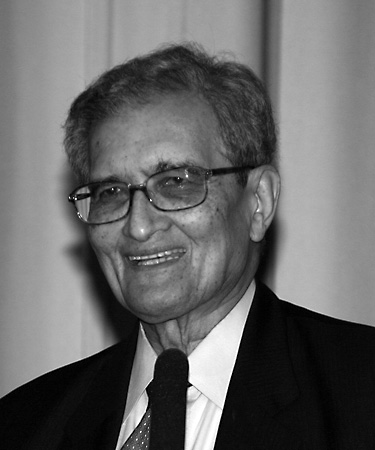
Amartya Sen  ( অমর্ত্য সেন ) was conceived in Santiniketan, West Bengal, India. His dad was a teacher named Sen, and he worked with West Bengal as executive of the Public Service Commission. His mom was called Amita Sen. Amartya Sen went to at the St. Gregory’s School, Dhaka in 1941. Following the division of the enormous nation into Bangladesh and India, his family moved to India. There he contemplated the Vis-Bharati University School. Sen graduated with First Class praises in B.A. Financial matters from Presidency College, Kolkata in 1953. At that year, he got another B.A. at the Trinity College, Cambridge.

Amartya Sen distributed his Ph.D. postulation titled ‘The selection of Techniques’ in 1959. A short time later, he turned into a meeting Professor of Economics at Massachusetts Institute of Technology. Sen instructed as a Professor from 1961 to 1972 at the Delhi School of Economics. He was likewise a Professor of Economics at the London School of Economics and the University of Calcutta.

Early Career

Amartya Sen’s book titled ‘Aggregate Choice and Social Welfare’ was distributed in 1970. This is one of his most compelling theories that manage the issues of essential welfare, equity, balance and individual rights. Amartya distributed another book titled ‘On Economic Inequality’ in 1973. The book was about the investigation of the hypothesis of welfare financial matters about the investigation of monetary disparity. Amartya Sen underlined the reason for absence of nourishment supply, hunger and examination of starvations in a paper he wrote in 1982. It is a ground-breaking exposition entitled, ‘Neediness and Famines: An Essay on Entitlements and Deprivation.’

Amartya distributed his work in 1984 on creating economies; it was called ‘Assets, Values, and Development. The book was coordinated on the venture configuration, shadow rating, business arrangement, and welfare financial aspects.

Sen’s book “On Ethics and Economics’ was distributed in 1987. It was a basic bit of composing that asserted that welfare financial aspects and present day moral investigations could profit by one another. Amartya Sen composed a questionable exposition titled ‘In excess of 100 Million Women Are Missing’ for The New York Review of Books in 1990. The exposition presented the truth and the explanations behind the sex lopsidedness. Sen printed another book in 1992 with the title ‘Imbalance Re-inspected.’ The Harvard University Press distributed it. The book examined the idea of disparity and coordinated primarily on the ‘ability approach.’

Grant Winning Work

Amartya Sen distributed a Nobel Prize Lecture in 1998 titled ‘The Possibility of Social Choice.’ In this book, Amartya confirmed that welfare financial matters was a center subject in social change hypothesis. In 1999 Amartya Sen composed a book titled ‘Improvement as Freedom.’ He worried on the idea of ‘universal advancement’ and ‘improvement financial matters.’ Sen distributed a two volumes book on soundness, opportunity, and equity in 2001. It was titled ‘Reasonability and Freedom.’ He made an enlightened vision into every one of these ideas. The sen’s distribution, ‘The Argumentative Indian’ was appreciated and well known. It was distributed in 2005. The book is an assemblage of articles on history and personality of India. It likewise manages the need to comprehend contemporary India and its contentious custom.

Amartya Sen turned out a book titled; the possibility of Justice’ in 2009. Allen Lane and Harvard University Press distributed it. He underlined in this book the monetary thinking and a scrutinize of John Rawls book, ‘Hypothesis of Justice.’ Amartya Sen inspected the connection between viciousness, harmony, and popular government in his book ‘Harmony and Democratic Society.’ He researches into the hypothesis of ‘sorted out savagery,’ war, massacre and fear based oppression. It was distributed in 2011.

Presently, Amartya Sen is working at Harvard University as a Professor of Economics and Philosophy. He is additionally with the Tomas W. Lamont University as a meeting Professor.

Normal Attribution

Amartya Sen is a popular, grant winning economist.Amartya is an essayist and logician. He presented the predicament of the oppressed and starving individuals. He is constantly occupied with the issues of the general public’s least fortunate individuals. He turned out with down to earth answers for avoid the lack of nourishment and starvation. Amartya Sen was incorporated on Time Magazine’s rundown of ‘World’s 50 Most Influential People Who Matter’. A Nobel Laureate who aided in making the United Nations Human Development Index. He is a remarkable scholarly. Sen’s book has been converted into in excess of thirty dialects everywhere throughout the world.

A portion of the Sen’s astounding distributions incorporate, ‘Improvement as Freedom,’ ‘Neediness and Famines: An Essay on Entitlements and Deprivation,’ ‘On Economic Inequality,’ ‘Imbalance Re-inspected,’ ‘The Argumentative Indian’ and ‘The Idea of Justice.’ Presently, Sen is a Professor of Economics and Philosophy at Harvard University. Sen has likewise been a Professor at the London School of Economics and The University of Oxford. Amartya Sen has won a scope of accomplishments including the Bharat Ratna, the most noteworthy non military personnel grant in India. Devotedly dedicated to the reason for completion neediness and hardship, his works feature answers for a progressively libertarian culture. This commended market analyst is the 6th Indian to get a Nobel and the principal Asian beneficiary of the Economics Prize.

Family

Amartya Sen got hitched to Nabaneeta Dev Sen, and they had two children from their association. Be that as it may, they isolated in 1971. Sen wedded Eva Colorni in 1973, and they had two youngsters together. She kicked the bucket of stomach malignant growth in 1985.

Amartya Sen wedded Emma Georgina Rothschild in 1991. The couple frequently travels in their Cambridge home in Massachusetts.

Subhasree Ganguly biography

Subhasree Ganguly  ( শুভশ্রী গাঙ্গুলী ) was conceived on 03-11-1990 in Bardhaman in the province of West Bengal, India. She is an Indian Film Actress, Model and Screenwriter who understood for her work in Bengali, Odia, Tamil and Hindi film.

Subhasree Ganguly Complete Bio and Career

Subhashree made her acting introduction from the Ashok Pati coordinated Oriya film “Mate Ta Love Helare” in 2008. Around the same time, she made her presentation with the Bengali film from the Bengali film Pitribhumi inverse Jeet. In this film, she assumed the supporting job in the film and depicted the character of Jhuma. In the consequent time, she showed up in the quantities of Bengali movies, for example, Bajimaat, Challenge, Paran Jai Jaliya Re, Khokababu, Khoka 420, Ami Shudhu Cheyechi Tomay, Bachchan, Prem Ki Bujhini, and Amar Aponjon.

In 2017, she marked her first Indo-Bangladeshi movie Boss 2: Back to Rule coordinated by Baba Yadav is an activity spine chiller film inverse Jeet. Around the same time, she had a chance to work in the Joydip Mukherjee coordinated film Nabab inverse Bangladeshi film industry hotshot “Shakib Khan”.It was likewise an Indo-Bangladeshi film. This film made an achievement in the Bangladesh film industry and announced as one of the fruitful movies in the cinema world.

This splendid entertainer won numerous honors for her exceptional acting, for example, she won the Anandalok Awards for the Bengali film Bajimaat for Best Debut in Bengali film and her name was declared as the victor of Fairever Anandalok Nayikar Khonje.

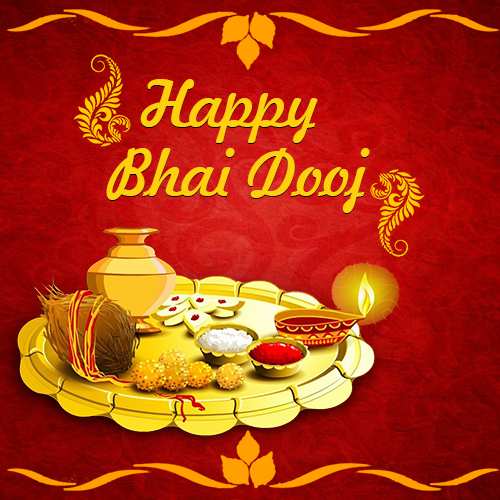
Bhai Dooj Celebration

To do the service, sisters will organize an uncommon Puja Thali. Sisters get up promptly in the first part of the day to plan scrumptious dishes for their siblings on the favorable day of Bhai Dooj.

On the event of Bhai Dooj ( ভাইফোঁটার শুভেচ্ছা ), young ladies wear brilliant ensembles and enhance the puja thalis. The exertion taken for designing the thali will be remunerated by siblings with presents and endowments. On that day sisters contends each other to demonstrate their best in finishing thalis. Bhai Dooj is known by different names like ‘Bhav-Bij’ in Maharashtra, ‘Bhai Phota’ in West Bengal, ‘Bhai Beej’ in Gujarat. Other well known names of Bhai Dooj are Bhathru Dwithiya, Bhai-Tika, Bhatri Ditya and Yamadwitheya.

On the off chance that the sister is hitched, the sibling visits his sister upon the arrival of Bhai Dooj as a custom. The sibling needs to sit and enable his sister to complete the function. The Bhai Dooj puja is performed in a puja room and the sister adorns the thali with mithai, batshaas, roli and rice alongside coconut. The thali can be likewise enhanced with shaded grains, felt paper, blooms, publication paints, buds, leaves, petals, sequins and globules. Sister applies a tika and akshat on the temple of her sibling and performs arti on him. Sister will give desserts in the mouth of sibling and furthermore offer endowments to him. During this function, sister appeals to God for sibling’s long life, wellbeing and bliss. Consequently the sibling favors his sister and gives her money or blessings.

There are different legends on Bhai Dooj. Bhai Dooj is praised as ‘Yama Dwiteeya’ in light of the fact that it is accepted that on this day, Yamaraj who is the Lord of Death and the guardian of Hell visited his sister Yami’s home. During his visit to her home, she put a tika on his brow appealing to God for his thriving and security and to stamp this event we are observing Bhai Dooj. Another legend is that Lord Krishna went to his sister Subhadra in the wake of slaughtering Narakasura who invited Lord Krishna with light, blooms and sweet and applied a tika on his brow. Bhai Dooj celebration is additionally means the fondness of sister Sudarshana who console her sibling King Nandivadhan who was bothered when his sibling Mahavir, author of Jainism, achieved nirvana. From that time onwards ladies have been regarded during Bhai Dooj celebration.

Bhai Dooj is commended in practically all pieces of India, fundamentally in North India. Just contrast is that the celebration is known in various names in various pieces of India and in certain spots the traditions and customs likewise vary. Bhai Dooj is a festival to reinforce the bond among sisters and siblings. Bhai Dooj symbolizes the serene concurrence of every person to elevate solidarity and to empower agreeable public activity.

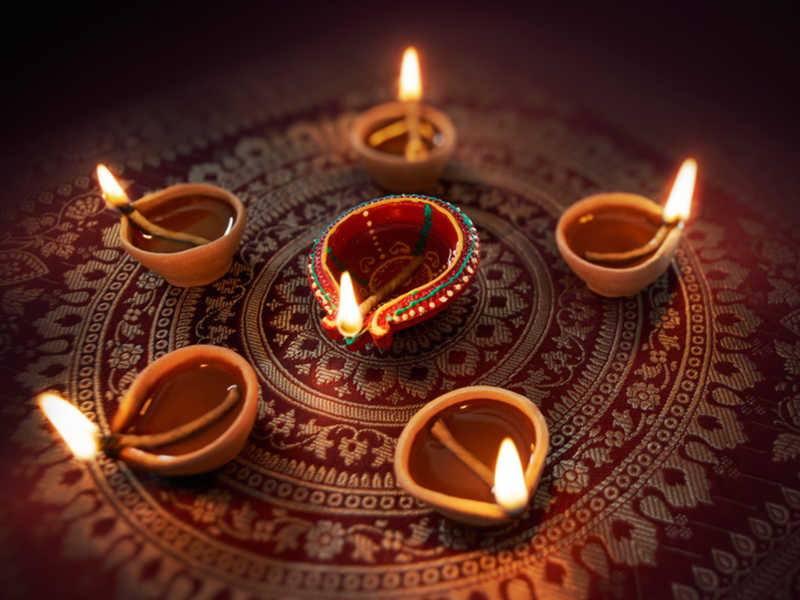
Wish a Happy Diwali to Your Loved One This Time

Indeed, the beneficiary methods a great deal to you and along these lines it is difficult to locate an ideal present for him/her. You need something which communicates your actual feelings and emotions. One needs to put a ton of exertion choosing presents for life partner, companions and corporate companions. In any case, things have disentangled with the approach of the online blessing stores where you may discover plenty of gifting choices.

Send an expand decorative design to astound the beneficiary

Nothing can express your adoration and care superior to blooms. Blooms are the language of feeling thus you can send rose packs or bunches or an expand decorative design contingent upon the kind of relationship you share with the individual. To send roses to your woman love, peruse through scope of alternatives and spot orders. Pick red and pink roses to make a perfect rose blessing. Consolidate tulips and select improving pressing to wish ‘Happy Diwali’ ( শুভ দীপাবলি )to the recipient. Scent rich blooms when pressed in wonderful pressing can go about as charming amazement for the recipient. The splendid shading and aroma of entrancing blooms may add satisfaction to the celebration of lights.

Lip-smacking cakes to pass on your generous wishes

Sweet edibles and scrumptious cakes structure a necessary piece of Diwali festivity. You may send cakes that make for good endowments. Examine the assortment of cakes on the web and spot orders. Pick among strawberry cakes, nut cakes, vanilla, chocolate and pineapple cake. You can be as innovative as conceivable by picking cakes as endowments. Spot orders for custom cakes.

Convey desserts on the event of Diwali

Online blessing conveyance stores are altogether stacked with tasty, new and mouth-watering desserts that are simply ideal for the event of Diwali. In the event that the collector has a sweet tooth, you should not waste even a moment yet examine the scope of desserts like Gulab Jamun, Kaju Katli, Mawa Barfi, Mysore Pak, Rasgulla and spot orders. Your blessing will be acknowledged with a sweet grin by the collector. You can likewise convey desserts hamper where you may join 3-4 desserts to be conveyed.

Diwali blessing hampers to add to the delight

A solitary Diwali blessing like a cake or blossoms or desserts might be gotten with a grin yet on the off chance that you send Diwali hampers, it will be acknowledged with genuine bliss. On the off chance that you need to get a quick ‘Thank You’ call from the recipient, you ought to send a Diwali blessing hamper. Send a cake, pack of blooms and dry natural products together to astonish the collector.

Natural product container to welcome great wellbeing

In the event that you have to send a Diwali blessing to your folks, grandparents or any other individual recuperating from sickness, you ought to convey natural product bushel. Wish a decent wellbeing and Happy Diwali by sending a mix of regular organic products.

Design a site like this with WordPress.com
Get started